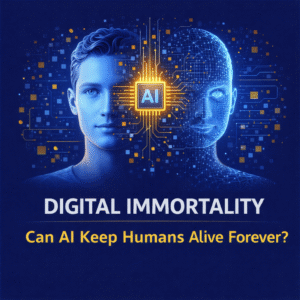
Digital Immortality – Can AI Keep Humans Alive Forever?
Technology is growing very fast. Today, AI can talk like humans, write like humans, and even copy human voices.
This brings a very interesting question:
Can AI keep a human alive even after death?
This idea is called Digital Immortality.
In this blog, we will understand what digital immortality is, how it works, and whether it is really possible—all in simple language.
What is Digital Immortality?
Digital Immortality means using technology and AI to preserve a person’s thoughts, voice, behavior, and memories in digital form.
The goal is to create a digital version of a human that can:
Talk like the person
Think like the person
Answer questions like the person
Even when the real person is no longer alive.
How Does AI Try to Achieve Digital Immortality?
AI collects large amounts of personal data, such as:
Text messages and emails
Social media posts
Voice recordings
Videos and photos
Personal stories and habits
This data is used to train AI models so they can imitate the person’s personality and style.
Simple Example
Imagine a famous writer whose:
Books
Interviews
Voice recordings
are used to create an AI chatbot.
People can still “talk” to this digital version and get responses similar to the writer.
Is Digital Immortality Really Possible?
The honest answer is:
👉 Partially, yes. Completely, no.
AI can:
Copy language style
Imitate voice
Respond like a human
But AI cannot:
Feel emotions
Have consciousness
Think independently like a real human
So it is more like a digital copy, not real life.
Benefits of Digital Immortality
Preserving knowledge and experience
Remembering loved ones
Teaching future generations
Keeping historical figures “alive”
Emotional support for families
Risks and Ethical Problems
Digital immortality also raises serious concerns:
Privacy issues
Consent after death
Data misuse
Emotional dependency
Identity theft
Because of this, strong ethical rules and laws are needed.
Digital Immortality in Real Life Today
Some early examples already exist:
AI voice cloning
Chatbots trained on personal data
Virtual avatars of celebrities
Digital memorial platforms
But full digital immortality is still in development stage.
Why Students Should Know About Digital Immortality
It is an emerging AI concept
Combines technology, ethics, and philosophy
Important for future AI careers
Common topic in debates and exams
Helps understand AI limitations
Future of Digital Immortality
In the future:
AI models will become more realistic
Digital humans will improve
Legal frameworks will grow
Society will debate moral boundaries
But true human life will always remain unique.
Conclusion
Digital immortality is a fascinating idea where AI tries to preserve a human digitally.
While AI can imitate behavior and voice, it cannot replace real human life, emotions, or consciousness.
For students, this topic is important to understand how powerful—and limited—AI really is.
डिजिटल अमरता – क्या एआई इंसान को हमेशा ज़िंदा रख सकता है?
आज तकनीक बहुत तेज़ी से आगे बढ़ रही है। आर्टिफ़िशियल इंटेलिजेंस अब इंसानों की तरह बात कर सकता है, लिख सकता है और आवाज़ की नकल भी कर सकता है।
इसी कारण एक नया और रोचक विचार सामने आया है—
क्या एआई इंसान को मरने के बाद भी “ज़िंदा” रख सकता है?
इस विचार को डिजिटल अमरता (Digital Immortality) कहा जाता है।
डिजिटल अमरता क्या है?
डिजिटल अमरता का अर्थ है तकनीक और एआई की मदद से किसी व्यक्ति की
सोच, यादें, आवाज़, व्यवहार और व्यक्तित्व को डिजिटल रूप में सुरक्षित रखना।
इसका उद्देश्य एक ऐसा डिजिटल रूप बनाना है जो:
इंसान की तरह बात करे
उसी शैली में उत्तर दे
उसके ज्ञान और अनुभव को आगे बढ़ाए
भले ही वास्तविक व्यक्ति जीवित न हो।
एआई डिजिटल अमरता कैसे बनाने की कोशिश करता है?
एआई किसी व्यक्ति से जुड़ा बहुत सारा डाटा इकट्ठा करता है, जैसे:
संदेश और ईमेल
सोशल मीडिया पोस्ट
आवाज़ की रिकॉर्डिंग
वीडियो और तस्वीरें
व्यक्तिगत आदतें और अनुभव
इन सभी डाटा से एआई को प्रशिक्षित किया जाता है ताकि वह
उस व्यक्ति जैसा व्यवहार कर सके।
एक आसान उदाहरण
मान लीजिए किसी प्रसिद्ध लेखक की:
किताबें
भाषण
इंटरव्यू
का उपयोग करके एक एआई चैटबॉट बनाया जाए।
लोग उस चैटबॉट से बात कर सकते हैं और लेखक जैसी ही प्रतिक्रियाएँ पा सकते हैं।
क्या डिजिटल अमरता वास्तव में संभव है?
सच्चाई यह है—
👉 कुछ हद तक हाँ, पूरी तरह नहीं।
एआई कर सकता है:
भाषा और बोलने की शैली की नकल
आवाज़ की कॉपी
इंसान जैसे उत्तर
लेकिन एआई नहीं कर सकता:
भावनाएँ महसूस करना
चेतना (consciousness) रखना
इंसान की तरह स्वतंत्र रूप से सोचना
इसलिए यह वास्तविक जीवन नहीं, बल्कि एक डिजिटल प्रतिरूप है।
डिजिटल अमरता के फायदे
ज्ञान और अनुभव को सुरक्षित रखना
प्रियजनों की यादों को संजोना
भविष्य की पीढ़ियों को सिखाना
ऐतिहासिक व्यक्तियों को समझना
भावनात्मक सहारा प्रदान करना
जोखिम और नैतिक समस्याएँ
डिजिटल अमरता से कई गंभीर प्रश्न भी उठते हैं:
निजता (privacy) का खतरा
मृत्यु के बाद सहमति का सवाल
डाटा का गलत उपयोग
भावनात्मक निर्भरता
पहचान की चोरी
इसीलिए नैतिक नियम और कानून बहुत ज़रूरी हैं।
आज के समय में डिजिटल अमरता
आज पूरी डिजिटल अमरता संभव नहीं है, लेकिन कुछ शुरुआती रूप मौजूद हैं:
एआई आवाज़ की नकल
व्यक्तिगत डाटा से बने चैटबॉट
सेलिब्रिटी के वर्चुअल अवतार
डिजिटल स्मृति प्लेटफ़ॉर्म
यह तकनीक अभी विकास की अवस्था में है।
छात्रों के लिए डिजिटल अमरता जानना क्यों ज़रूरी है?
यह उभरती हुई एआई तकनीक है
तकनीक और नैतिकता दोनों से जुड़ी है
परीक्षा और वाद-विवाद में उपयोगी
भविष्य की एआई नौकरियों के लिए महत्वपूर्ण
एआई की सीमाओं को समझने में मददगार
डिजिटल अमरता का भविष्य
भविष्य में:
एआई और अधिक वास्तविक लगेगा
डिजिटल इंसान बेहतर बनेंगे
कानूनी ढाँचे मजबूत होंगे
समाज नैतिक सीमाओं पर चर्चा करेगा
लेकिन मानव जीवन की अनोखापन हमेशा बना रहेगा।
निष्कर्ष
डिजिटल अमरता एक आकर्षक विचार है, जिसमें एआई इंसान को डिजिटल रूप में संरक्षित करने की कोशिश करता है।
हालाँकि एआई आवाज़ और व्यवहार की नकल कर सकता है, लेकिन वह
वास्तविक भावनाओं, चेतना और जीवन का स्थान नहीं ले सकता।
छात्रों के लिए यह समझना ज़रूरी है कि एआई कितना शक्तिशाली है और उसकी सीमाएँ क्या हैं।