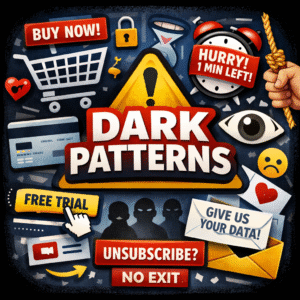
Dark Patterns in Apps & Websites – Ways Users Are Tricked Online
Today, almost everything we do is connected to apps and websites—shopping, studying, booking tickets, or even paying bills. But many apps and websites use dark patterns to manipulate users into doing things they did not really want to do.
Dark patterns are design tricks used intentionally to confuse, pressure, or mislead users. Most people fall for them without even realizing it.
Let’s understand what dark patterns are, how they work, and why users should be careful.
What Are Dark Patterns?
Dark patterns are user interface (UI) designs that push users toward certain actions, such as:
Buying something extra
Sharing personal data
Subscribing to paid services
Clicking misleading buttons
These designs benefit the company but harm the user’s choice and freedom.
Common Types of Dark Patterns
1. Forced Subscription
Some apps ask for your card details for a “free trial” and later automatically charge money. Cancelling the subscription is made very difficult.
Example:
Free for 7 days → card required → hidden auto-renewal
2. Hidden Costs
Extra charges suddenly appear at the final payment step.
Example:
Product price looks cheap, but taxes, platform fees, or delivery charges are added at checkout.
3. Trick Questions
Buttons or options are written in confusing language.
Example:
❌ “No, I don’t want to save money”
✔️ “Yes, continue”
Users often click the wrong option by mistake.
4. Privacy Zuckering
Apps push users to share more personal data than needed.
Example:
An app forces access to contacts, location, or photos even when it’s not required.
5. Confirm Shaming
Users are made to feel guilty for saying “no”.
Example:
“No thanks, I don’t care about my future”
This emotionally pressures users to accept offers.
6. Fake Urgency & Scarcity
Websites create fake pressure to make quick decisions.
Example:
“Only 1 seat left!”
“Offer ends in 5 minutes!”
Many times, this urgency is fake.
7. Hard-to-Cancel Services
Signing up is easy, but canceling requires many steps, emails, or phone calls.
Example:
Cancel option hidden deep inside settings.
Why Companies Use Dark Patterns
To increase sales
To collect more user data
To lock users into subscriptions
To boost engagement numbers
Unfortunately, profit is often prioritized over user trust.
Why Dark Patterns Are Dangerous
Users lose money unknowingly
Personal data gets misused
Users feel cheated and frustrated
Trust in digital platforms decreases
For students and new internet users, dark patterns are especially risky.
How to Protect Yourself from Dark Patterns
Read screens carefully before clicking
Avoid rushing due to fake timers
Check subscription and renewal terms
Review app permissions
Always read final payment details
Unsubscribe using official settings only
Being aware is the best defense.
Are Dark Patterns Illegal?
In many countries, including India, governments are now taking action. Consumer protection laws are slowly being updated to stop unfair digital practices. Some companies have already been fined for using dark patterns.
Final Thoughts
Dark patterns are not bugs or mistakes—they are planned tricks. As users, we must stay alert and informed. A smart user does not click blindly.
Understanding dark patterns helps you make better online decisions and avoid digital traps.
Apps और Websites में Dark Patterns – यूज़र्स को ट्रिक करने के तरीके
आज हम लगभग हर काम मोबाइल ऐप्स और वेबसाइट्स से करते हैं—शॉपिंग, पढ़ाई, टिकट बुक करना या ऑनलाइन पेमेंट। लेकिन कई ऐप्स और वेबसाइट्स Dark Patterns का इस्तेमाल करके यूज़र्स को धोखे से ऐसे फैसले लेने पर मजबूर करती हैं जो वे असल में नहीं लेना चाहते।
Dark Patterns कोई गलती नहीं होतीं, बल्कि जानबूझकर बनाए गए डिज़ाइन ट्रिक्स होते हैं।
Dark Patterns क्या होते हैं?
Dark Patterns ऐसे डिज़ाइन तरीके होते हैं जो यूज़र को:
ज़बरदस्ती कुछ खरीदने पर मजबूर करें
अनचाहा सब्सक्रिप्शन दिला दें
ज़्यादा पर्सनल डेटा शेयर करवा लें
यूज़र को कन्फ्यूज़ करके गलत बटन क्लिक करवा दें
इनसे फायदा कंपनी को होता है, यूज़र को नहीं।
Dark Patterns के आम प्रकार
1. Forced Subscription
ऐप फ्री ट्रायल के नाम पर कार्ड डिटेल्स मांग लेता है और बाद में अपने-आप पैसे काट लेता है।
कैंसिल करना बहुत मुश्किल बना दिया जाता है।
2. Hidden Charges
शुरू में प्राइस कम दिखती है, लेकिन पेमेंट के टाइम अचानक एक्स्ट्रा चार्ज जुड़ जाते हैं।
3. Confusing Questions
ऑप्शन ऐसे लिखे जाते हैं कि यूज़र गलत बटन क्लिक कर दे।
उदाहरण:
“नहीं, मुझे पैसे बचाने में दिलचस्पी नहीं है”
4. Privacy Zuckering
ऐप ज़रूरत से ज़्यादा परमिशन मांगता है—जैसे कॉन्टैक्ट्स, लोकेशन या गैलरी।
5. Confirm Shaming
यूज़र को “ना” कहने पर शर्मिंदा किया जाता है।
उदाहरण:
“नहीं, मुझे अपना भविष्य नहीं चाहिए”
6. Fake Urgency और Scarcity
झूठा प्रेशर बनाया जाता है ताकि यूज़र जल्दी फैसला ले।
उदाहरण:
“सिर्फ 1 सीट बची है!”
“ऑफर 5 मिनट में खत्म!”
7. Cancel करना मुश्किल बनाना
साइन-अप आसान, लेकिन कैंसिल करने के लिए बहुत सारे स्टेप्स।
कंपनियाँ Dark Patterns क्यों इस्तेमाल करती हैं?
ज़्यादा सेल्स बढ़ाने के लिए
यूज़र का डेटा इकट्ठा करने के लिए
सब्सक्रिप्शन से पैसे कमाने के लिए
यूज़र को प्लेटफॉर्म से जोड़कर रखने के लिए
Dark Patterns खतरनाक क्यों हैं?
यूज़र का पैसा बिना जाने खर्च हो जाता है
पर्सनल डेटा का गलत इस्तेमाल
भरोसा टूट जाता है
खासकर स्टूडेंट्स ज्यादा प्रभावित होते हैं
Dark Patterns से कैसे बचें?
हर स्क्रीन ध्यान से पढ़ें
जल्दीबाज़ी में क्लिक न करें
सब्सक्रिप्शन की शर्तें चेक करें
ऐप परमिशन सोच-समझकर दें
फाइनल पेमेंट अमाउंट जरूर देखें
क्या Dark Patterns गैरकानूनी हैं?
अब कई देशों में, भारत समेत, कंज़्यूमर प्रोटेक्शन लॉ के तहत Dark Patterns पर एक्शन लिया जा रहा है। कुछ कंपनियों पर जुर्माना भी लगाया गया है।
निष्कर्ष (Conclusion)
Dark Patterns इंटरनेट की दुनिया के छुपे हुए जाल हैं। एक समझदार यूज़र वही है जो हर क्लिक से पहले सोचे। जानकारी और जागरूकता ही सबसे बड़ी सुरक्षा है।
✨ Your website is an excellent place for people who want to expand their knowledge of computers and technology. I really value educational content that explains concepts clearly and makes learning comfortable for beginners. Your Computer Study Notes articles provide helpful information and encourage readers to explore different subjects. It is not always easy to understand technical topics, but simple explanations can make a big difference in the learning process. Thank you for making useful information available to readers and students. Keep working on this wonderful educational platform and continue sharing more interesting computer study notes. I wish you continued success with your website and future articles!