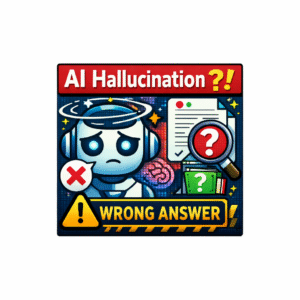
AI Hallucination – When AI Gives Wrong Answers (Causes & Solutions)
Artificial Intelligence (AI) tools like ChatGPT, Google Gemini, and other chatbots are very powerful. They can answer questions, write essays, solve problems, and even help in coding.
But sometimes, AI gives wrong, confusing, or completely fake answers. This problem is called AI Hallucination.
Let’s understand this topic in a very simple way.
What is AI Hallucination?
AI Hallucination happens when an AI system gives an answer that sounds correct but is actually wrong or made-up.
👉 In simple words:
AI is confident, but the answer is incorrect.
Example:
If you ask AI about a book that does not exist and it still gives a detailed summary, that is AI hallucination.
Why Does AI Hallucinate? (Main Causes)
1. Lack of Correct Data
AI learns from huge amounts of data.
If the data is missing, outdated, or incorrect, AI may guess the answer.
2. AI Predicts, It Doesn’t Think
AI does not understand like humans.
It predicts words based on patterns, not facts.
So sometimes it creates sentences that look logical but are not true.
3. Complex or Vague Questions
If a question is unclear or confusing, AI may try to fill gaps by imagining information.
4. Overconfidence of AI Models
AI is designed to always respond.
Instead of saying “I don’t know”, it sometimes creates an answer.
5. Limited Real-Time Knowledge
Most AI tools do not have live internet access.
If you ask about very recent events, AI may give wrong information.
Real-Life Examples of AI Hallucination
AI gives a fake reference or research paper
AI creates wrong historical dates
AI suggests non-existent laws or rules
AI writes incorrect coding logic
AI provides false medical or technical advice
Why is AI Hallucination Dangerous?
AI hallucination can cause serious problems, especially when students blindly trust AI.
Risks:
Students may learn wrong concepts
Fake information in assignments or exams
Wrong advice in health, law, or finance
Poor decision-making in projects
How Can Students Avoid AI Hallucination?
1. Always Cross-Check Information
Never trust AI blindly.
Verify answers using books, official websites, or teachers.
2. Ask Clear and Specific Questions
Better questions = better answers.
Avoid vague or confusing prompts.
3. Use AI as a Helper, Not as Final Authority
AI should support learning, not replace thinking.
4. Ask for Sources
You can ask AI:
“Give reliable sources for this answer.”
5. Use Multiple Sources
Compare AI answers with Google, textbooks, and class notes.
How Developers Reduce AI Hallucination (Technical Solutions)
Better training data
Fact-checking systems
Human feedback (RLHF)
Limiting AI responses in sensitive areas
Regular model updates
Is AI Hallucination a Bug or a Feature?
It is not intentional, but it is a known limitation of current AI systems.
Researchers are working hard to reduce it, but 100% accuracy is still not possible.
Final Thoughts
AI Hallucination is a reminder that AI is powerful but not perfect.
For students, the key lesson is:
Use AI smartly, think critically, and always verify facts.
AI is a great learning partner—but your brain is still the boss!
AI Hallucination – जब AI गलत जवाब देता है (कारण और समाधान)
आज के समय में Artificial Intelligence (AI) जैसे ChatGPT, Google Gemini और दूसरे AI टूल्स पढ़ाई, असाइनमेंट, कोडिंग और कंटेंट लिखने में बहुत मदद करते हैं।
लेकिन कई बार AI गलत, अधूरी या बिल्कुल झूठी जानकारी भी दे देता है। इसी समस्या को AI Hallucination कहा जाता है।
AI Hallucination क्या होता है?
जब AI कोई ऐसा जवाब दे देता है जो सुनने में सही लगता है लेकिन असल में गलत या मनगढ़ंत होता है, उसे AI Hallucination कहते हैं।
👉 आसान भाषा में:
AI पूरे कॉन्फिडेंस के साथ गलत जवाब देता है।
उदाहरण:
अगर आप AI से किसी ऐसी किताब के बारे में पूछें जो असल में मौजूद ही नहीं है और AI फिर भी उसकी पूरी कहानी बता दे – तो यह AI Hallucination है।
AI गलत जवाब क्यों देता है? (मुख्य कारण)
1. सही डेटा की कमी
AI उसी डेटा से सीखता है जो उसे दिया गया है।
अगर डेटा पुराना, अधूरा या गलत हो, तो AI गलत जवाब दे सकता है।
2. AI सोचता नहीं, अनुमान लगाता है
AI इंसानों की तरह सोच नहीं सकता।
वह शब्दों और पैटर्न के आधार पर जवाब अनुमान से बनाता है।
3. सवाल सही तरीके से न पूछा जाना
अगर सवाल बहुत घुमा-फिराकर या अधूरा हो, तो AI खुद से जानकारी जोड़ देता है।
4. AI का ज़्यादा आत्मविश्वास
अधिकतर AI टूल्स “मुझे नहीं पता” कहने के बजाय
कोई न कोई जवाब बना देते हैं।
5. लेटेस्ट जानकारी की कमी
कई AI टूल्स के पास रियल-टाइम इंटरनेट एक्सेस नहीं होता,
इसलिए नए टॉपिक्स पर गलत जानकारी मिल सकती है।
AI Hallucination के रियल-लाइफ उदाहरण
नकली रिसर्च पेपर या रेफरेंस देना
गलत तारीखें या फैक्ट्स बताना
ऐसे कानून या नियम बताना जो मौजूद ही नहीं हैं
गलत कोड या लॉजिक देना
हेल्थ या करियर से जुड़ी गलत सलाह
AI Hallucination खतरनाक क्यों है?
अगर स्टूडेंट्स बिना जांचे AI पर भरोसा करें, तो नुकसान हो सकता है।
नुकसान:
गलत कॉन्सेप्ट सीखना
असाइनमेंट में गलत जानकारी
एग्ज़ाम में गलत उत्तर
प्रोजेक्ट में गलत निर्णय
भविष्य में स्किल्स कमजोर होना
स्टूडेंट्स AI Hallucination से कैसे बचें?
1. जानकारी हमेशा चेक करें
AI का जवाब बुक्स, नोट्स या टीचर से मिलाएं।
2. सवाल साफ और सीधा पूछें
जितना क्लियर सवाल होगा, जवाब उतना बेहतर होगा।
3. AI को हेल्पर समझें, गुरु नहीं
AI सीखने में मदद करे,
सोचना आपको खुद ही है।
4. सोर्स मांगें
AI से पूछें:
“इस जानकारी का सोर्स क्या है?”
5. एक से ज़्यादा जगह से पढ़ें
AI + Google + क्लास नोट्स = सही समझ
डेवलपर्स AI Hallucination कैसे कम करते हैं?
बेहतर और सही डेटा से ट्रेनिंग
फैक्ट-चेकिंग सिस्टम
ह्यूमन फीडबैक
सेंसिटिव टॉपिक्स पर लिमिट लगाना
AI मॉडल को समय-समय पर अपडेट करना
क्या AI Hallucination खत्म हो सकता है?
पूरी तरह नहीं।
यह AI की एक सीमा (Limitation) है, न कि जानबूझकर की गई गलती।
भविष्य में यह समस्या कम होगी, लेकिन 100% सही AI अभी संभव नहीं है।
अंतिम शब्द
AI बहुत ताकतवर है, लेकिन परफेक्ट नहीं।
हर स्टूडेंट को यह बात समझनी चाहिए:
AI का सही इस्तेमाल करें, खुद सोचें और फैक्ट ज़रूर जांचें।
AI आपका दोस्त है,
लेकिन दिमाग आज भी आपका ही सबसे बड़ा टूल है!