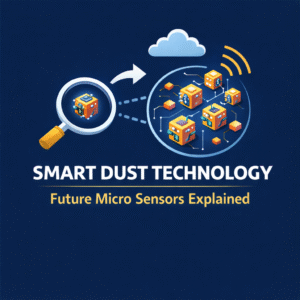
Smart Dust Technology – Future Micro Sensors Explained
Technology is becoming smaller, faster, and smarter every day. From big computers to tiny chips, innovation is moving towards miniaturization. One such futuristic technology is Smart Dust.
Smart Dust may sound like something from a science-fiction movie, but it is a real and emerging technology that can change how we collect data in the future.
What is Smart Dust Technology?
Smart Dust refers to very tiny sensors, sometimes as small as a grain of sand, that can:
Sense the environment
Collect data
Communicate wirelessly
Each tiny sensor is called a “mote”. These motes work together to monitor physical conditions without human involvement.
What Can Smart Dust Sense?
Smart Dust sensors can collect different types of data, such as:
Temperature
Light
Pressure
Sound
Movement
Air quality
Chemical presence
Because of their small size, they can be placed almost anywhere.
How Does Smart Dust Work?
Smart Dust works using a combination of:
Micro sensors – to detect changes
Microprocessor – to process data
Wireless communication – to send data
Power source – like tiny batteries or solar energy
Once deployed, these sensors collect data and send it to a central system for analysis.
Why is Smart Dust Important?
Smart Dust is important because it allows continuous monitoring in places where humans cannot easily go.
Key Benefits:
Extremely small size
Low power consumption
Real-time data collection
Works in large numbers
Minimal human effort required
Applications of Smart Dust Technology
1. Healthcare
Smart Dust can monitor:
Patient body temperature
Heart activity
Internal body conditions
This helps doctors in early disease detection.
2. Environmental Monitoring
Smart Dust can be used to:
Monitor air and water pollution
Track climate changes
Detect forest fires early
3. Agriculture
Farmers can use Smart Dust to:
Check soil moisture
Monitor crop health
Improve irrigation systems
4. Military and Security
Smart Dust can help in:
Battlefield surveillance
Detecting movement
Monitoring restricted areas
5. Smart Cities
Used in:
Traffic monitoring
Noise level detection
Infrastructure health monitoring
Challenges of Smart Dust
Despite its benefits, Smart Dust also faces challenges:
Privacy concerns
Data security risks
High development cost
Limited battery life
Ethical issues
Why Students Should Learn About Smart Dust
For students, Smart Dust is important because:
It is part of future technology
Related to IoT, AI, and nanotechnology
Frequently asked in exams and interviews
Helps understand real-world sensor systems
Future of Smart Dust Technology
In the future, Smart Dust will become:
More powerful
Cheaper
More energy-efficient
It may play a big role in healthcare, smart cities, and environmental protection.
Conclusion
Smart Dust Technology represents the future of sensing and monitoring. These tiny sensors can collect valuable data from almost anywhere. While challenges exist, Smart Dust has the potential to revolutionize many industries.
For students, learning about Smart Dust today means being prepared for the technologies of tomorrow.
Smart Dust Technology – भविष्य के माइक्रो सेंसर
आज की टेक्नोलॉजी दिन-ब-दिन छोटी, तेज़ और स्मार्ट होती जा रही है। पहले जहाँ कंप्यूटर बहुत बड़े होते थे, अब वही ताकत छोटे-छोटे चिप्स में आ गई है। इसी दिशा में एक नई और भविष्य की टेक्नोलॉजी है Smart Dust Technology।
नाम सुनकर यह किसी फिल्म जैसा लग सकता है, लेकिन Smart Dust असल में बहुत छोटे-छोटे सेंसर होते हैं जो भविष्य में डेटा इकट्ठा करने का तरीका बदल सकते हैं।
Smart Dust Technology क्या है?
Smart Dust बहुत ही छोटे सेंसर होते हैं, जिनका आकार कभी-कभी रेत के दाने जितना भी हो सकता है।
इन छोटे सेंसरों को “Motes” कहा जाता है।
ये सेंसर:
आसपास का वातावरण महसूस करते हैं
ज़रूरी डेटा इकट्ठा करते हैं
बिना तार (wireless) डेटा भेजते हैं
Smart Dust क्या-क्या माप सकता है?
Smart Dust सेंसर कई तरह की जानकारी इकट्ठा कर सकते हैं, जैसे:
तापमान
रोशनी
दबाव
आवाज़
हलचल (movement)
हवा की गुणवत्ता
केमिकल की मौजूदगी
इतने छोटे होने की वजह से इन्हें कहीं भी आसानी से लगाया जा सकता है।
Smart Dust कैसे काम करता है?
Smart Dust में ये मुख्य हिस्से होते हैं:
माइक्रो सेंसर – वातावरण में बदलाव पहचानने के लिए
माइक्रो प्रोसेसर – डेटा प्रोसेस करने के लिए
वायरलेस सिस्टम – डेटा भेजने के लिए
पावर सोर्स – छोटी बैटरी या सोलर एनर्जी
जब ये सेंसर किसी जगह फैलाए जाते हैं, तो खुद-ब-खुद डेटा इकट्ठा करके सेंट्रल सिस्टम तक भेज देते हैं।
Smart Dust क्यों ज़रूरी है?
Smart Dust की सबसे बड़ी खासियत यह है कि यह बिना इंसानी मदद लगातार निगरानी कर सकता है।
इसके फायदे:
बहुत छोटा आकार
कम बिजली की खपत
रियल-टाइम डेटा
एक साथ बड़ी संख्या में काम
कठिन जगहों पर भी इस्तेमाल
Smart Dust Technology के उपयोग
1. Healthcare (स्वास्थ्य क्षेत्र)
Smart Dust का इस्तेमाल किया जा सकता है:
शरीर का तापमान मापने में
दिल की गतिविधि मॉनिटर करने में
बीमारी की शुरुआती पहचान में
2. Environment Monitoring (पर्यावरण)
इससे मदद मिलती है:
हवा और पानी की गुणवत्ता जांचने में
प्रदूषण मापने में
जंगल की आग का जल्दी पता लगाने में
3. Agriculture (कृषि)
किसान इसका उपयोग कर सकते हैं:
मिट्टी की नमी जानने में
फसल की सेहत जांचने में
पानी की सही मात्रा तय करने में
4. Military और Security
Smart Dust काम आता है:
निगरानी (surveillance) में
मूवमेंट पहचानने में
बॉर्डर और सीमित इलाकों की सुरक्षा में
5. Smart Cities
इसका उपयोग होता है:
ट्रैफिक मॉनिटरिंग
शोर (noise) मापने
इमारतों और सड़कों की स्थिति जांचने में
Smart Dust की चुनौतियाँ
हालाँकि Smart Dust फायदेमंद है, लेकिन कुछ समस्याएँ भी हैं:
प्राइवेसी से जुड़े खतरे
डेटा सुरक्षा की समस्या
बनाने की लागत ज़्यादा
बैटरी जल्दी खत्म होना
नैतिक (ethical) सवाल
छात्रों के लिए Smart Dust क्यों ज़रूरी है?
छात्रों के लिए Smart Dust इसलिए महत्वपूर्ण है क्योंकि:
यह Future Technology का हिस्सा है
IoT, AI और Nanotechnology से जुड़ा है
एग्ज़ाम और इंटरव्यू में पूछा जाता है
रियल-वर्ल्ड टेक्नोलॉजी समझने में मदद करता है
Smart Dust Technology का भविष्य
आने वाले समय में Smart Dust:
और छोटा होगा
कम खर्चीला बनेगा
ज़्यादा पावरफुल होगा
यह Healthcare, Smart Cities और Environment Protection में बड़ी भूमिका निभा सकता है।
निष्कर्ष (Conclusion)
Smart Dust Technology भविष्य की एक बेहद खास टेक्नोलॉजी है। छोटे-छोटे सेंसर बड़ी जानकारी इकट्ठा कर सकते हैं। कुछ चुनौतियों के बावजूद, इसका भविष्य काफी उज्ज्वल है।
आज Smart Dust को समझना छात्रों के लिए कल की टेक्नोलॉजी के लिए तैयार होने जैसा है।