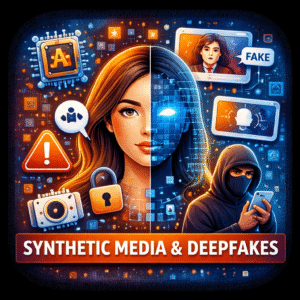
Synthetic Media & Deepfake Evolution – Upcoming Risks
In today’s digital world, technology is evolving fast. One of the most powerful and sometimes scary innovations is Synthetic Media and Deepfake Technology. These tools can create realistic videos, images, and audio that look or sound like real people—but often they are completely fake.
Let’s explore what they are, how they are evolving, and why we should be careful.
What is Synthetic Media?
Synthetic Media refers to any media content that is created or altered using AI or computer programs.
This includes:
AI-generated images
AI-created videos
AI-generated voices and audio
Chatbots that mimic human conversation
Basically, anything that looks real but is made by AI instead of humans is synthetic media.
What Are Deepfakes?
Deepfakes are a type of synthetic media where faces, voices, or movements of real people are replaced or generated using AI.
For example:
A celebrity’s face placed on another person in a video
A fake speech of a politician
Imitated voices for fraud or scams
Deepfakes are becoming so realistic that it’s hard to tell them apart from real content.
How Deepfake Technology is Evolving
AI is becoming more advanced, so deepfakes are more realistic.
Tools for creating deepfakes are becoming easy to use.
Videos and images can be generated in minutes with minimal effort.
Audio deepfakes can copy a person’s voice almost perfectly.
This evolution makes detecting fake content more difficult.
Risks of Synthetic Media & Deepfakes
1. Fake News & Misinformation
Deepfakes can spread lies, create panic, or influence opinions online.
2. Fraud & Identity Theft
Scammers can copy voices or faces to trick people into transferring money or revealing personal information.
3. Damage to Reputation
Celebrities, politicians, or ordinary people can have fake videos made that ruin their reputation.
4. Cybersecurity Threats
Deepfakes can be used in phishing attacks or to bypass security systems that rely on facial recognition.
5. Legal & Ethical Problems
It’s not always clear who is responsible when deepfakes are used for illegal purposes.
How to Protect Yourself
Verify news from trusted sources before sharing
Look for suspicious videos or images online
Use deepfake detection tools
Be cautious with personal videos or photos
Avoid sharing sensitive information online
Being aware is the first step in staying safe.
Why Students Should Know About Deepfakes
Students are often the most active on social media. Understanding deepfakes helps:
Avoid spreading fake content
Protect personal identity online
Prepare for careers in AI, cybersecurity, or digital media
Future of Synthetic Media & Deepfakes
AI will create even more realistic media
Detection tools will improve alongside deepfake creation
Ethical and legal frameworks will evolve
Humans must learn to critically evaluate digital content
Conclusion
Synthetic media and deepfakes are amazing technologies, but they also bring serious risks. Awareness, caution, and digital literacy are essential.
The key is enjoying technology without falling for fake content.
Synthetic Media और Deepfake Evolution – आने वाले खतरे
आज के डिजिटल युग में तकनीक बहुत तेजी से बढ़ रही है। इन सबसे शक्तिशाली और कभी-कभी डराने वाली तकनीकों में Synthetic Media और Deepfake Technology शामिल हैं। ये टूल्स ऐसे वीडियो, फोटो और ऑडियो बना सकते हैं जो असली इंसान जैसे दिखते या सुनाई देते हैं, लेकिन असल में पूरी तरह फेक होते हैं।
आइए समझते हैं कि ये क्या हैं, कैसे बढ़ रहे हैं और क्यों हमें सतर्क रहना चाहिए।
Synthetic Media क्या है?
Synthetic Media वो मीडिया कंटेंट है जिसे AI या कंप्यूटर प्रोग्राम की मदद से बनाया या बदला गया हो।
इसमें शामिल हैं:
AI द्वारा बनाई गई तस्वीरें
AI से तैयार किए गए वीडियो
AI द्वारा बनाई गई आवाज़
Chatbots जो इंसानों जैसी बातचीत करते हैं
सिंपल शब्दों में, जो असली दिखता है लेकिन AI द्वारा बनाया गया है, वही Synthetic Media है।
Deepfakes क्या हैं?
Deepfakes एक तरह का Synthetic Media है जिसमें किसी असली इंसान के चेहरे, आवाज़ या मूवमेंट को AI से बदला या नक़ल किया जाता है।
उदाहरण:
किसी सेलेब्रिटी का चेहरा किसी और के वीडियो में लगाना
किसी पॉलिटिशियन का फेक भाषण
किसी की आवाज़ नक़ल करना
Deepfakes इतने रियलिस्टिक हो गए हैं कि इन्हें असली से अलग करना मुश्किल हो जाता है।
Deepfake Technology कैसे बढ़ रही है?
AI और ज्यादा एडवांस हो रहा है, इसलिए deepfakes और असली लगते हैं।
Deepfake बनाने के टूल्स अब आसान हो गए हैं।
मिनटों में वीडियो और फोटो बनाया जा सकता है।
ऑडियो deepfakes अब किसी की आवाज़ को almost perfect कॉपी कर सकते हैं।
इस विकास से फेक कंटेंट पहचानना और भी मुश्किल हो गया है।
Synthetic Media और Deepfakes के खतरे
1. Fake News और Misinformation
Deepfakes झूठ फैला सकते हैं, पैनिक पैदा कर सकते हैं या लोगों की राय बदल सकते हैं।
2. Fraud और Identity Theft
Scammers किसी की आवाज़ या चेहरा कॉपी कर पैसे चुराने या व्यक्तिगत जानकारी लेने के लिए इस्तेमाल कर सकते हैं।
3. Reputation Damage
सेलेब्रिटी, पॉलिटिशियन या आम लोगों की फेक वीडियो से प्रतिष्ठा खराब हो सकती है।
4. Cybersecurity Threats
Deepfakes phishing attack में या फेस रिकग्निशन वाले सिक्योरिटी सिस्टम को धोखा देने में इस्तेमाल हो सकते हैं।
5. Legal और Ethical Problems
कानूनी तौर पर यह स्पष्ट नहीं है कि गलत काम करने पर जिम्मेदार कौन होगा।
खुद को कैसे सुरक्षित रखें
कोई भी न्यूज़ शेयर करने से पहले भरोसेमंद स्रोत चेक करें
ऑनलाइन संदेहजनक वीडियो और फोटो पहचानें
Deepfake detection tools का इस्तेमाल करें
निजी वीडियो और फोटो साझा करने में सावधान रहें
ऑनलाइन संवेदनशील जानकारी शेयर न करें
जागरूकता ही सबसे बड़ी सुरक्षा है।
छात्रों के लिए क्यों जरूरी है
छात्र अक्सर सोशल मीडिया पर सबसे ज्यादा एक्टिव होते हैं। Deepfakes समझना उन्हें मदद करता है:
फेक कंटेंट फैलाने से बचने में
ऑनलाइन पहचान सुरक्षित रखने में
AI, Cybersecurity और Digital Media में करियर की तैयारी में
भविष्य
AI और भी रियलिस्टिक मीडिया बनाएगा
Detection tools भी सुधरेंगे
कानून और एथिक्स नए रूप में आएंगे
हमें हमेशा डिजिटल कंटेंट को critically evaluate करना सीखना होगा
निष्कर्ष
Synthetic Media और Deepfakes शानदार तकनीकें हैं, लेकिन ये साथ ही गंभीर खतरे भी लाती हैं। जागरूक रहना, सावधान रहना और डिजिटल साक्षरता अपनाना बहुत जरूरी है।
तकनीक का मज़ा लें, लेकिन फेक कंटेंट में न फँसें।