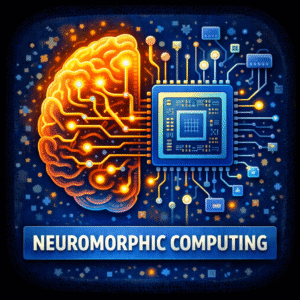
What is Neuromorphic Computing? – Brain-Inspired Computers Explained
Modern computers are very fast, but they do not work like the human brain. Our brain can learn, think, and make decisions using very little energy. To copy these abilities, scientists created a new type of computing called Neuromorphic Computing.
Neuromorphic computing tries to build computers that work like the human brain.
What is Neuromorphic Computing?
Neuromorphic computing is a technology where computers are designed by copying the structure and working style of the human brain.
Instead of normal processors, neuromorphic systems use:
Artificial neurons
Artificial synapses
Brain-like circuits
These systems process information the same way our brain does.
How Is the Human Brain Different from Normal Computers?
| Human Brain | Traditional Computer |
|---|---|
| Learns naturally | Follows fixed programs |
| Uses very low power | Uses high power |
| Works in parallel | Works step-by-step |
| Adapts easily | Needs reprogramming |
Neuromorphic computing tries to bring brain features into machines.
How Neuromorphic Computing Works (Simple Explanation)
Information is sent as small signals (like brain signals)
Artificial neurons receive and process signals
Synapses control signal strength
System learns from experience
Decisions improve over time
This process is closer to how humans think and learn.
Real-Life Examples of Neuromorphic Computing
1. Smart Robots
Robots can learn movements and react quickly to changes.
2. Self-Learning AI Systems
Systems improve performance without heavy training.
3. Vision and Speech Recognition
Better image and voice understanding using less power.
4. Brain-Computer Interfaces
Helping people control devices using brain signals.
Popular Neuromorphic Chips
IBM TrueNorth
Intel Loihi
These chips are inspired by real brain neurons.
Benefits of Neuromorphic Computing
Very low power consumption
Faster learning
Real-time decision making
Better pattern recognition
More human-like AI
Challenges of Neuromorphic Computing
Complex hardware design
Difficult programming models
Limited commercial use
High research cost
Why Neuromorphic Computing Is Important for Students
Students interested in:
Artificial Intelligence
Robotics
Cognitive Science
Computer Architecture
Future Computing
should understand this technology, as it represents the future of AI systems.
Future of Neuromorphic Computing
In the future:
Computers will learn like humans
AI will become more energy-efficient
Smart devices will think faster
Brain-inspired machines will grow
Final Thoughts
Neuromorphic computing is a big step toward human-like intelligence in machines. By copying how the brain works, computers can become smarter, faster, and more efficient.
This technology may change the future of AI and computing.
Neuromorphic Computing – मस्तिष्क से प्रेरित कंप्यूटर
आज के समय में कंप्यूटर बहुत तेज़ हैं, लेकिन वे इंसान के मस्तिष्क की तरह नहीं सोच सकते। हमारा मस्तिष्क बहुत कम ऊर्जा में सीखता, सोचता और फैसले लेता है। इस क्षमता को मशीनों में लाने के लिए Neuromorphic Computing का अविष्कार किया गया।
Neuromorphic Computing ऐसे कंप्यूटर बनाता है जो इंसानी दिमाग की तरह काम करते हैं।
Neuromorphic Computing क्या है?
Neuromorphic Computing एक तकनीक है जिसमें कंप्यूटर इंसानी मस्तिष्क की संरचना और काम करने के तरीके को कॉपी करके बनाए जाते हैं।
इसके लिए इस्तेमाल होते हैं:
Artificial Neurons (कृत्रिम न्यूरॉन्स)
Artificial Synapses (कृत्रिम साइनैप्स)
Brain-like Circuits (मस्तिष्क जैसे सर्किट)
यह सिस्टम जानकारी को इंसानी दिमाग की तरह प्रोसेस करता है।
इंसानी मस्तिष्क और सामान्य कंप्यूटर में अंतर
| इंसानी मस्तिष्क | पारंपरिक कंप्यूटर |
|---|---|
| प्राकृतिक तरीके से सीखता है | प्रोग्राम के अनुसार चलता है |
| बहुत कम ऊर्जा में काम करता है | ज्यादा ऊर्जा खर्च करता है |
| एक साथ कई काम करता है (parallel) | एक-एक करके काम करता है (sequential) |
| आसानी से अनुकूलित हो जाता है | फिर से प्रोग्राम करना पड़ता है |
Neuromorphic Computing का उद्देश्य है मस्तिष्क जैसी क्षमताएँ मशीनों में लाना।
Neuromorphic Computing कैसे काम करता है? (सरल तरीका)
जानकारी छोटे सिग्नल के रूप में आती है (जैसे दिमाग में सिग्नल)
Artificial Neurons सिग्नल रिसीव और प्रोसेस करते हैं
Synapses सिग्नल की ताकत को नियंत्रित करते हैं
सिस्टम अनुभव से सीखता है
समय के साथ फैसले और बेहतर होते हैं
यह प्रोसेस इंसान के सोचने और सीखने के तरीके के करीब है।
Neuromorphic Computing के उदाहरण
1. स्मार्ट रोबोट
रोबोट सीख सकते हैं और बदलाव के अनुसार जल्दी प्रतिक्रिया दे सकते हैं।
2. Self-Learning AI Systems
सिस्टम बिना भारी ट्रेनिंग के अपने आप बेहतर होते हैं।
3. Vision और Speech Recognition
कम ऊर्जा में बेहतर इमेज और वॉइस पहचान।
4. Brain-Computer Interfaces
इंसान अपने मस्तिष्क के सिग्नल से डिवाइस कंट्रोल कर सकते हैं।
प्रसिद्ध Neuromorphic Chips
IBM TrueNorth
Intel Loihi
ये चिप्स इंसानी न्यूरॉन्स से प्रेरित हैं।
Neuromorphic Computing के फायदे
कम ऊर्जा खर्च
तेज़ सीखने की क्षमता
रियल-टाइम निर्णय
पैटर्न पहचान में बेहतर
इंसान जैसी AI
चुनौतियाँ
हार्डवेयर डिज़ाइन जटिल
प्रोग्रामिंग कठिन
सीमित कमर्शियल उपयोग
रिसर्च में अधिक लागत
छात्रों के लिए महत्व
जो छात्र AI, Robotics, Cognitive Science या Future Computing में करियर बनाना चाहते हैं, उन्हें Neuromorphic Computing को समझना चाहिए, क्योंकि यह भविष्य की AI तकनीक है।
भविष्य
कंप्यूटर इंसान की तरह सीखेंगे
AI ऊर्जा-कुशल होगा
स्मार्ट डिवाइस तेज़ और बेहतर होंगे
Brain-inspired मशीनें बढ़ेंगी
निष्कर्ष
Neuromorphic Computing इंसानी मस्तिष्क की तरह सोचने वाली मशीनों की दिशा में बड़ा कदम है।
यह तकनीक AI और कंप्यूटिंग का भविष्य बदल सकती है।