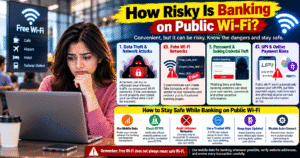
🔐 How Risky Is Banking on Public Wi-Fi?
Online banking over public Wi-Fi is convenient, but it can expose users to cybersecurity risks. Free Wi-Fi networks in cafés, airports, hotels, and railway stations may not always be trustworthy. Attackers can create fake hotspots, redirect users to fraudulent banking pages, or attempt to intercept unencrypted internet traffic. Although modern banking apps use security protections, users should still take precautions when accessing financial accounts on public networks.
⚠️ 1. Data Theft and Network Attacks
On unsecured Wi-Fi networks, attackers may attempt to monitor or intercept internet traffic. If a website or connection lacks proper encryption, sensitive information could be exposed. HTTPS encryption and secure banking apps significantly reduce these risks, but they cannot protect against every type of attack.
🎭 2. Fake Wi-Fi Networks
Cybercriminals can create fake hotspots with names that resemble legitimate networks, such as Free_Cafe_WiFi or Airport_Free_WiFi. Once connected, users may encounter fraudulent login pages or other attempts to steal personal information.
🔑 3. Password and Banking Credential Theft
Attackers may use phishing links and fake banking websites to capture usernames, passwords, and other sensitive information. Always verify the website address before entering banking credentials, and avoid opening banking links received from unknown sources.
💳 4. UPI and Online Payment Risks
Connecting to public Wi-Fi does not automatically expose your UPI PIN or banking details. However, fake payment pages, malicious apps, and phishing attacks can put your financial information at risk. Never enter sensitive banking information on unfamiliar websites.
🛡️ How to Stay Safe While Banking on Public Wi-Fi
- 📱 Use Mobile Data: Prefer your mobile network for banking transactions and other sensitive financial activities.
- 🔒 Check HTTPS: Verify the official banking website address and ensure the connection uses HTTPS.
- 🚫 Avoid Unknown Networks: Connect only to trusted Wi-Fi networks whose authenticity you can verify.
- 🔑 Protect Sensitive Information: Never share your OTP, UPI PIN, or banking password with callers or suspicious websites.
- 🛡️ Use a Trusted VPN: A reputable VPN can reduce certain network-level risks, but it cannot protect you from phishing or fraudulent banking websites.
- 📲 Keep Apps Updated: Install banking apps from official app stores and regularly update your phone’s operating system.
- ⚙️ Disable Auto-Connect: Prevent your device from automatically connecting to unfamiliar public Wi-Fi networks.
🚨 What Should You Do If Your Banking Details Are Compromised?
If you notice a suspicious transaction, contact your bank immediately and secure the affected account or payment method. In India, report suspected financial cyber fraud by calling 1930 or filing a complaint through the official National Cyber Crime Reporting Portal. Preserve transaction IDs, screenshots, and other relevant evidence.
✅ Conclusion
Banking on public Wi-Fi carries risks that depend on network security, encryption, and your online activity. Modern banking apps provide important security protections, but fake hotspots and phishing attacks can still threaten your financial information.
🔐 How Risky Is Banking on Public Wi-Fi?
Public Wi-Fi पर online banking करना convenient जरूर है, लेकिन इसमें कुछ cybersecurity risks भी होते हैं। Cafés, airports, hotels और railway stations के free Wi-Fi networks हमेशा सुरक्षित नहीं होते। अगर आप किसी unsecured या fake Wi-Fi network से connect होते हैं, तो attackers आपकी online activity को monitor करने, fake banking pages दिखाने या personal information चुराने की कोशिश कर सकते हैं।
⚠️ 1. Data Theft का Risk
Unsecured public Wi-Fi पर attackers कुछ situations में आपके internet traffic को intercept करने की कोशिश कर सकते हैं। अगर कोई website या connection properly encrypted नहीं है, तो sensitive information expose हो सकती है। हालांकि, modern banking apps और HTTPS encryption इस risk को काफी कम करते हैं।
🎭 2. Fake Wi-Fi Networks
Scammers genuine network जैसे नाम वाला fake hotspot बना सकते हैं, जैसे Free_Cafe_WiFi या Airport_Free_WiFi। अगर आप गलत network से connect हो जाते हैं, तो attacker आपको fake login pages पर redirect करने की कोशिश कर सकता है।
🔑 3. Password और Banking Credentials का खतरा
Fake banking pages या phishing links के जरिए attackers आपका username, password और दूसरी sensitive information चुराने की कोशिश कर सकते हैं। इसलिए public Wi-Fi पर किसी unknown link से banking website open न करें।
💳 4. UPI और Online Payments
Public Wi-Fi इस्तेमाल करने से अपने आप UPI PIN या banking details चोरी नहीं होतीं। लेकिन अगर आप fake payment page, malicious app या phishing link का इस्तेमाल करते हैं, तो financial fraud का risk बढ़ सकता है।
🛡️ Public Wi-Fi पर Banking करते समय Safety Tips
- 📱 Mobile Data Use करें: Banking और financial transactions के लिए अपना mobile data इस्तेमाल करना बेहतर विकल्प है।
- 🔒 HTTPS Check करें: Official banking website का सही domain और secure HTTPS connection verify करें।
- 🚫 Unknown Wi-Fi से बचें: ऐसे networks से connect न हों जिनकी authenticity confirm नहीं है।
- 🔑 OTP और UPI PIN सुरक्षित रखें: किसी व्यक्ति, suspicious website या अनजान caller के साथ share न करें।
- 🔐 VPN का इस्तेमाल करें: Trusted VPN कुछ network-level risks कम कर सकता है, लेकिन phishing और fake banking pages से पूरी सुरक्षा नहीं देता।
- 📲 Banking App Update रखें: Official app store से banking app install करें और phone का software updated रखें।
- ⚙️ Auto-Connect बंद करें: Public Wi-Fi networks से automatic connection disable रखें।
🚨 अगर Banking Details Compromise हो जाएँ तो?
अगर आपको suspicious transaction दिखाई देता है, तो तुरंत अपने bank को inform करें, affected cards या banking access को secure करें और India में financial cyber fraud की report 1930 पर करें। आप cybercrime.gov.in पर भी complaint दर्ज कर सकते हैं।
✅ Conclusion
Public Wi-Fi पर banking का risk network की security, website encryption और आपकी online activity पर निर्भर करता है। Modern banking apps में security protections मौजूद हैं, लेकिन fake hotspots और phishing attacks अभी भी खतरा पैदा कर सकते हैं।