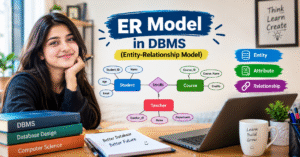
ER Model in DBMS (Entity-Relationship Model)
📘 What Is an ER Model in DBMS?
The ER Model (Entity-Relationship Model) is a visual representation of a database that shows how different entities are connected to each other. It helps developers understand and organize data before creating a database.
For example, in a college database, Student, Teacher, and Course are entities that can be connected through different relationships.
🔹 Main Components of an ER Model
1. Entity 🧑🎓
An entity is a real-world object about which data is stored, such as a student, teacher, or employee.
2. Attribute 📝
An attribute describes the properties of an entity. For example, a Student entity may have attributes like Student_ID, Name, and Age.
3. Relationship 🔗
A relationship shows how two or more entities are connected. For example, a student enrolls in a course.
💡 Why Is the ER Model Important?
The ER Model makes database design easier to understand and manage. It helps identify entities, organize their attributes, and define relationships before implementing the database.
✅ Conclusion
The ER Model in DBMS is an important tool for designing a well-structured database. It provides a clear visual understanding of data and the relationships between different entities, making database development simpler and more organized.
ER Model in DBMS (Entity-Relationship Model)
📘 What Is an ER Model in DBMS?
The ER Model (Entity-Relationship Model) DBMS का एक important part है, जिसका use database का structure समझने और design करने के लिए किया जाता है। यह हमें बताता है कि database में अलग-अलग entities क्या हैं और वे एक-दूसरे से कैसे जुड़ी हुई हैं।
For example, एक college database में Student, Teacher और Course अलग-अलग entities होती हैं। इन entities के बीच relationships के through data को आसानी से समझा जा सकता है।
🔹 Main Components of an ER Model
1. Entity 🧑🎓
An Entity कोई real-world object होता है, जिसके बारे में database में information store की जाती है। जैसे Student, Teacher, Employee और College.
2. Attribute 📝
An Attribute किसी entity की विशेषताओं या details को बताता है। उदाहरण के लिए, Student entity के attributes में Student_ID, Name, Age और Email शामिल हो सकते हैं।
3. Relationship 🔗
A Relationship दो या दो से अधिक entities के बीच connection को दर्शाता है। जैसे एक Student किसी Course में admission लेता है। यहाँ Student और Course के बीच relationship है।
💡 Importance of the ER Model
ER Model database को properly organize करने में मदद करता है। इसकी मदद से developers database बनाने से पहले entities, attributes और relationships को आसानी से identify और समझ सकते हैं।
✅ Conclusion
The ER Model in DBMS database design को आसान और व्यवस्थित बनाता है। यह data को visual form में represent करता है, जिससे database का structure समझना और उसे plan करना आसान हो जाता है।