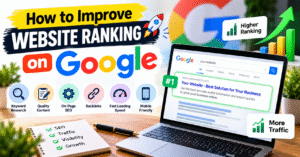
How to Improve Website Ranking on Google: A Complete SEO Guide
🔍 Introduction
Improving your website ranking on Google is essential for increasing online visibility, attracting visitors, and growing your business. When your website appears higher in search results, more people can discover your products, services, or blog. Search Engine Optimization (SEO) helps improve your website’s visibility through relevant keywords, high-quality content, technical improvements, and a better user experience. With a consistent SEO strategy, you can work toward increasing organic traffic and building a stronger online presence.
🎯 1. Choose the Right Keywords
Keyword research is one of the first steps in an effective SEO strategy. Keywords are the words and phrases people type into Google when searching for information, products, or services. Choose relevant keywords that match your website content and your audience’s search intent. Tools such as Google Keyword Planner and Google Trends can help you discover useful keyword ideas. Include your target keywords naturally in page titles, headings, URLs, and content without overusing them.
✍️ 2. Create High-Quality Content
High-quality content helps visitors find useful answers and understand your website’s purpose. Write original, informative, and easy-to-read articles that address your audience’s questions. Use clear headings, practical examples, helpful tips, and relevant information to make your content more valuable. Avoid copying content from other websites or publishing articles that offer little value. Regularly review and update existing content to keep it accurate, relevant, and useful for readers.
⚙️ 3. Optimize On-Page SEO
On-page SEO involves improving individual web pages so that search engines and visitors can understand them easily. Write descriptive title tags and engaging meta descriptions for your pages. Organize content with clear H1, H2, and H3 headings, use descriptive URLs, and add relevant internal links. Include meaningful image alt text to improve accessibility and help search engines understand your images. These improvements can make your website easier to navigate and help search engines interpret your content.
📱 4. Make Your Website Mobile-Friendly
A mobile-friendly website is important because many people browse the internet using smartphones and tablets. Use a responsive design that automatically adjusts to different screen sizes. Make sure your text is readable, navigation is simple, and buttons are easy to tap. Avoid layouts that require users to zoom in or scroll horizontally. A smooth mobile experience helps visitors access information comfortably and supports Google’s mobile-first approach to indexing.
⚡ 5. Improve Website Loading Speed
Website speed affects how easily visitors can access your content. Slow-loading pages may frustrate users and cause them to leave before the content appears. To improve performance, compress images, remove unnecessary scripts, enable browser caching where appropriate, and choose reliable web hosting. You can use Google PageSpeed Insights to identify performance issues. Also, monitor Core Web Vitals, which measure important aspects of loading performance, interactivity, and visual stability.
🔗 6. Build Quality Backlinks
Backlinks are links from other websites that point to your website. Relevant, naturally earned backlinks can help search engines discover your content and may support your website’s credibility. You can attract backlinks by publishing useful guides, creating original research, sharing valuable resources, and building genuine relationships with websites in your industry. Avoid spammy link-building tactics and paid link schemes intended to manipulate rankings, as these may violate Google’s spam policies.
🛠️ 7. Use Google Search Console
Google Search Console is a free tool that helps website owners understand how their pages perform in Google Search. It provides information about search queries, clicks, impressions, indexing status, and certain technical issues. Verify your website, review its search performance regularly, and investigate pages that are not indexed as expected. These insights can help you identify content opportunities, monitor changes, and make informed SEO improvements.
🗺️ 8. Submit an XML Sitemap
An XML sitemap lists important URLs on your website and helps search engines discover your pages. It can be particularly useful for new websites, large websites, or websites with complex structures. Generate a sitemap containing valid, indexable URLs and submit it through Google Search Console. Keep the sitemap updated when important pages change. Remember that submitting a sitemap does not guarantee that Google will index every page or improve its ranking.
🏢 9. Optimize Your Website for Local SEO
If your business serves customers in a particular city or region, local SEO can help improve its visibility in relevant local searches. Create or update your Google Business Profile with accurate business information, including your name, address, phone number, working hours, and services. Encourage genuine customer reviews and respond to them professionally. You can also create useful location-specific pages and include relevant local information to help potential customers find your business.
📊 10. Monitor and Measure SEO Performance
Tracking your SEO performance helps you understand what is working and where improvements are needed. Use Google Search Console to monitor clicks, impressions, search queries, and average search position. Google Analytics can help you understand website traffic and visitor behavior. Review your results regularly, identify pages that need improvement, and update your strategy based on the data. SEO takes time, so focus on consistent progress rather than expecting immediate results.
💡 Conclusion
Improving your website ranking on Google requires a combination of quality content, keyword research, on-page optimization, technical SEO, mobile usability, and natural backlink building. Use tools such as Google Search Console and PageSpeed Insights to monitor performance and identify opportunities for improvement. Focus on creating a useful experience for visitors and following Google’s search guidelines. With consistent effort and regular optimization, you can strengthen your website’s organic visibility and build sustainable long-term growth.
🚀 SEO Tip: Focus on helping your audience first, keep your website technically healthy, and improve your content using real performance data. No SEO strategy can guarantee the number-one position on Google.
How to Improve Website Ranking on Google: A Complete SEO Guide
🔍 Introduction
Google पर अपनी website की ranking improve करना किसी भी online business या blog के लिए बहुत ज़रूरी है। जब आपकी website search results में ऊपर दिखाई देती है, तो अधिक लोग उसे visit कर सकते हैं और आपके business की online visibility बढ़ सकती है। इसके लिए आपको Search Engine Optimization (SEO) पर ध्यान देना होगा। सही keywords, quality content, fast loading speed, mobile-friendly design और quality backlinks आपकी website की search performance को बेहतर बनाने में मदद कर सकते हैं।
🎯 1. Choose the Right Keywords
Keywords वे words और phrases हैं जिन्हें लोग Google पर information खोजने के लिए type करते हैं। अपनी website के topic से जुड़े relevant keywords चुनें और उन्हें title, headings, URL और content में naturally use करें। Keyword research के लिए Google Keyword Planner और Google Trends जैसे tools उपयोगी हो सकते हैं। केवल keywords को बार-बार लिखने के बजाय users के search intent को समझें और उनकी जरूरत के अनुसार content तैयार करें।
✍️ 2. Create High-Quality Content
Quality content SEO की सबसे important foundations में से एक है। ऐसा content लिखें जो readers के सवालों का सही, स्पष्ट और उपयोगी जवाब दे। अपने articles में meaningful headings, relevant examples, helpful tips और updated information शामिल करें। Content original रखें और केवल search engines के लिए लिखने के बजाय readers की जरूरतों को प्राथमिकता दें। Regularly existing articles को update करना भी उपयोगी हो सकता है, खासकर जब information बदलती रहती है।
⚙️ 3. Optimize Your On-Page SEO
On-page SEO का मतलब है अपनी website के pages को search engines और users के लिए बेहतर बनाना। हर page के लिए descriptive title tag और relevant meta description लिखें। Content को clear H1, H2 और H3 headings में organize करें। Images के लिए descriptive alt text इस्तेमाल करें और URLs को short तथा meaningful रखें। Internal links के माध्यम से related pages को जोड़ें, ताकि users और search engines आपकी website का content आसानी से समझ सकें।
📱 4. Make Your Website Mobile-Friendly
बहुत से users smartphones से Google पर search करते हैं, इसलिए आपकी website का mobile पर सही तरीके से काम करना ज़रूरी है। Responsive design अपनाएँ, readable font sizes रखें और buttons को आसानी से clickable बनाएँ। सुनिश्चित करें कि content अलग-अलग screen sizes पर सही दिखाई दे। Mobile usability बेहतर होने से visitors को अच्छा experience मिलता है और वे आपकी website पर जानकारी आसानी से access कर सकते हैं।
⚡ 5. Improve Website Loading Speed
Slow website visitors को परेशान कर सकती है और page छोड़ने की संभावना बढ़ा सकती है। Loading speed improve करने के लिए images को compress करें, unnecessary scripts कम करें, browser caching का सही उपयोग करें और reliable hosting चुनें। Google PageSpeed Insights की मदद से performance issues पहचान सकते हैं। Core Web Vitals जैसे loading performance, interactivity और visual stability metrics पर ध्यान देना भी उपयोगी है।
🔗 6. Build Quality Backlinks
Backlinks वे links होते हैं जो दूसरी websites से आपकी website की ओर आते हैं। Relevant और trustworthy websites से मिलने वाले natural backlinks आपकी content credibility और search visibility में मदद कर सकते हैं। इसके लिए useful guides बनाएं, original research publish करें और अपने industry से जुड़े websites के साथ genuine relationships बनाएँ। Paid link schemes, spam links और ranking manipulate करने वाली techniques से बचें, क्योंकि ये search engine policies का उल्लंघन कर सकती हैं।
🛠️ 7. Use Google Search Console
Google Search Console एक useful free tool है, जो आपको अपनी website की Google Search performance समझने में मदद करता है। इसके माध्यम से आप search queries, impressions, clicks, indexing issues और कुछ technical problems की जानकारी देख सकते हैं। अपनी website verify करें, sitemap submit करें और महत्वपूर्ण pages की indexing status check करें। नियमित monitoring से आपको पता चल सकता है कि किन pages में सुधार की आवश्यकता है।
🗺️ 8. Submit an XML Sitemap
XML sitemap आपकी website के important URLs की सूची प्रदान करता है। यह Google को आपकी website के pages discover करने में मदद कर सकता है, विशेषकर बड़ी या नई websites पर। Sitemap generate करके Google Search Console में submit करें और सुनिश्चित करें कि उसमें valid तथा indexable URLs शामिल हों। ध्यान रखें कि sitemap submit करने से हर page की indexing या ranking की guarantee नहीं मिलती।
🏢 9. Optimize Your Website for Local SEO
अगर आपका business किसी specific city या area में customers को services देता है, तो Local SEO पर ध्यान दें। अपने Google Business Profile की जानकारी accurate रखें, जैसे business name, address, phone number, working hours और services। Customers से genuine reviews लेने के लिए प्रोत्साहित करें और उनका professional तरीके से जवाब दें। Website पर location-specific service pages और relevant local information जोड़ना भी उपयोगी हो सकता है।
📊 10. Track Your SEO Performance
SEO में results समझने के लिए regular performance tracking ज़रूरी है। Google Search Console से organic clicks, impressions, search queries और average position देखें। Google Analytics का उपयोग करके website traffic और visitors के behavior को समझें। इन insights की मदद से identify करें कि कौन-से pages अच्छा perform कर रहे हैं और कहाँ content, usability या technical SEO में सुधार किया जा सकता है। SEO में समय लग सकता है, इसलिए consistent efforts और realistic expectations बनाए रखें।
💡 Conclusion
Google पर website ranking improve करने के लिए SEO की कई activities को साथ में करना पड़ता है। Relevant keywords, helpful content, optimized pages, mobile-friendly design, fast loading speed, quality backlinks और technical SEO पर लगातार काम करें। Google Search Console और PageSpeed Insights जैसे tools से अपनी progress monitor करें। कोई भी SEO technique top ranking की guarantee नहीं देती, लेकिन users को बेहतर experience देने और search engine guidelines follow करने से long-term organic growth की संभावनाएँ बेहतर हो सकती हैं.
🚀 SEO Tip: पहले अपनी website की technical health और content quality सुधारें, फिर regular monitoring के आधार पर आगे की strategy बनाएं।