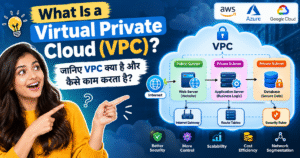
What Is a Virtual Private Cloud (VPC)? A Complete Beginner’s Guide
☁️ Introduction to Virtual Private Cloud (VPC)
Cloud computing has transformed how businesses store data, host applications, and manage IT infrastructure. Instead of maintaining expensive physical servers, organizations can use cloud services to access computing resources over the internet.
A Virtual Private Cloud (VPC) is a logically isolated virtual network within a public cloud environment. It allows users to launch cloud resources, such as virtual machines, databases, and applications, inside a network that they can configure and control.
With a VPC, businesses can manage IP addresses, create subnets, configure routing, and define security rules according to their requirements. This makes it easier to build secure, flexible, and scalable cloud infrastructure.
For example, an organization can host its website in a public subnet while keeping its database in a private subnet, reducing direct exposure of sensitive information to the internet.
🔍 What Is a Virtual Private Cloud (VPC)?
A Virtual Private Cloud is a cloud networking service that provides a logically separated network for cloud resources. It operates within a cloud provider’s infrastructure but allows users to configure network settings according to their needs.
Popular cloud platforms, including Amazon Web Services (AWS), Microsoft Azure, and Google Cloud, provide virtual networking capabilities that help organizations design and manage cloud environments.
A VPC typically includes:
- 🌐 IP Address Range: Defines the network addresses available for your cloud resources.
- 🧩 Subnets: Divide the network into smaller sections.
- 🛣️ Route Tables: Determine where network traffic should go.
- 🛡️ Security Rules: Control which network connections are allowed or denied.
- 🔗 Network Gateways: Connect resources to the internet or other networks when required.
These components work together to provide greater control over communication between cloud resources.
⚙️ How Does a VPC Work?
A VPC works by creating a virtual network with defined boundaries and configurable traffic rules. Cloud resources deployed inside this network communicate according to the network configuration and security policies.
1. 🌐 Create a Virtual Network
Define a private IP address range for your cloud environment. This range determines the addresses available to resources within the VPC.
2. 🧩 Configure Subnets
Divide the network into subnets for different purposes, such as hosting public-facing web servers and private databases.
3. 🛣️ Set Up Routing
Configure route tables and gateways to determine how resources communicate with each other, the internet, or other networks.
4. 🛡️ Apply Security Rules
Use firewalls, security groups, network access control lists, and other available controls to restrict unwanted network traffic.
5. 🖥️ Deploy Cloud Resources
Launch applications, virtual machines, and databases inside the network. They communicate according to the routes and security policies you configure.
🧩 Key Components of a Virtual Private Cloud
Understanding the main components of a VPC helps you design an effective cloud network.
1. 🌐 IP Address Range (CIDR)
A VPC uses a defined IP address range, commonly expressed in CIDR notation. For example, 10.0.0.0/16 provides a private IPv4 address space that can be divided into smaller subnets.
2. 🧩 Subnets
Subnets organize cloud resources into separate network segments. Public-facing resources and internal services can be placed in different subnets with different routing and access rules.
3. 🛣️ Route Tables
Route tables contain rules that determine the next destination for network traffic. They help direct traffic between subnets, gateways, and connected networks.
4. 🔐 Security Groups and Network ACLs
These controls help filter network traffic. Security groups generally operate at the resource or network-interface level, while network access control lists can filter traffic at the subnet level in platforms such as AWS.
5. 🌍 Internet Gateway and NAT
An internet gateway can enable internet connectivity for appropriately configured resources. A NAT service can allow private resources to initiate outbound internet connections without directly accepting unsolicited inbound connections through that NAT path.
🌟 Benefits of Using a VPC
A Virtual Private Cloud offers several advantages for organizations moving applications and services to the cloud.
🛡️ 1. Enhanced Network Security
Custom network rules and subnet separation help limit access to sensitive systems and reduce unnecessary exposure.
⚙️ 2. Greater Control
Administrators can configure IP ranges, routing, network segmentation, and access policies to suit application requirements.
📈 3. Scalability
Cloud resources and network capacity can be adjusted as workloads grow, subject to the cloud provider’s limits and configuration.
💰 4. Cost Efficiency
Organizations can avoid managing all the physical networking infrastructure themselves. However, cloud resource usage, NAT gateways, data transfer, and other services may still incur charges.
🔄 5. Network Segmentation
Separate application, database, and management layers to simplify access management and help contain security incidents.
🏢 Real-World Example of a VPC
Consider an online shopping company that operates an e-commerce website. It needs to accept customer orders, process payments, and store customer information securely.
The company can design its VPC with three main layers:
🌐 Public Subnet
The public subnet can host a web server or load balancer that customers access through the internet.
🖥️ Private Application Subnet
The application layer handles business logic, APIs, order processing, and communication between the website and database.
🗄️ Private Database Subnet
The database layer stores customer records, product details, and order information. It can be configured without direct public internet access.
In this architecture, customers connect to the public-facing entry point. Application services process requests and communicate with the database through permitted network paths.
This structure helps separate responsibilities, manage access, and improve the overall security of the application. A secure implementation also requires appropriate identity management, encryption, monitoring, patching, and application-level controls.
🔐 Is a VPC Completely Private and Secure?
A VPC provides logical network isolation, but it does not automatically make every resource private or secure.
Security depends on how the environment is configured. Incorrect routing, overly permissive firewall rules, exposed services, or weak account permissions can introduce vulnerabilities.
To improve VPC security:
- Keep databases and internal services in appropriately configured private subnets.
- Allow only the network traffic that applications actually require.
- Use strong identity and access management policies.
- Encrypt sensitive information in transit and at rest.
- Monitor network activity and regularly review security configurations.
- Avoid exposing administrative interfaces directly to the public internet.
Following these practices helps create a more secure cloud environment.
⚖️ VPC vs Traditional Private Network
A Virtual Private Cloud and a traditional private network both provide ways to organize and control network communication, but they differ in how infrastructure is provisioned and managed.
☁️ Virtual Private Cloud (VPC): Uses cloud-based infrastructure, supports flexible provisioning, and offers configurable networking through cloud consoles and APIs.
🏢 Traditional Private Network: Often relies on organization-managed physical networking equipment, such as routers, switches, and firewalls, which may require additional hardware and maintenance.
A VPC can reduce the need to maintain physical network infrastructure, but it does not eliminate the need for network administration or security management.
☁️ VPC in AWS, Azure, and Google Cloud
Different cloud providers offer similar virtual networking capabilities, although their terminology and implementation details vary.
🟠 Amazon Web Services (AWS)
Amazon Virtual Private Cloud (Amazon VPC) lets users define virtual networks, subnets, route tables, and network security controls.
🔵 Microsoft Azure
Azure Virtual Network (VNet) provides private networking for Azure resources and supports network segmentation, routing, and connectivity options.
🔴 Google Cloud
Google Cloud Virtual Private Cloud networks provide networking for resources running on Google Cloud, with configurable connectivity and network policies.
The underlying concepts are similar, but specific features, limits, and pricing depend on the selected provider.
❓ Frequently Asked Questions (FAQs)
1. What is the main purpose of a VPC?
The main purpose of a VPC is to provide a logically isolated and configurable network for cloud resources, allowing organizations to manage connectivity, IP addresses, routing, and network security.
2. Is a VPC free to use?
Some cloud networking features may be available without additional charges, while other components, such as NAT gateways, public IP addresses, or data transfer, may incur costs. Always check the provider’s current pricing.
3. What is the difference between a public subnet and a private subnet?
A public subnet generally has a route to an internet gateway, while a private subnet does not have a direct route for general inbound internet access. Actual accessibility also depends on IP addressing, firewall rules, gateways, and other configuration details.
4. Can a VPC connect to an on-premises network?
Yes. Depending on the cloud provider, a VPC or equivalent virtual network can connect to an organization’s on-premises network through VPN connections or dedicated connectivity services.
5. Who should learn about VPCs?
Students, cloud engineers, network administrators, DevOps professionals, cybersecurity learners, and software developers can all benefit from understanding VPC networking.
📝 Conclusion
A Virtual Private Cloud (VPC) is an important part of modern cloud infrastructure. It enables organizations to organize cloud resources within a logically isolated network and control how those resources communicate.
By understanding IP ranges, subnets, routing, gateways, and network security controls, beginners can develop the foundation needed to build and manage cloud applications.
Whether you are learning cloud computing or designing a production application, understanding VPC concepts is a valuable step toward creating scalable and secure network architectures.
☁️ What Is a Virtual Private Cloud (VPC)? जानिए VPC क्या है और कैसे काम करता है
☁️ Introduction: Virtual Private Cloud (VPC) क्या है?
आज के digital world में Cloud Computing का इस्तेमाल तेजी से बढ़ रहा है। Businesses अपने data को store करने, websites host करने और applications चलाने के लिए cloud services का उपयोग करते हैं। इससे उन्हें महंगे physical servers खरीदने और maintain करने की जरूरत कम हो जाती है।
Virtual Private Cloud (VPC) एक ऐसा virtual network है, जो public cloud के अंदर logically isolated environment प्रदान करता है। इसकी मदद से users अपने cloud resources, जैसे virtual machines, databases और applications को एक configurable network के अंदर चला सकते हैं।
VPC के जरिए आप IP addresses manage कर सकते हैं, subnets बना सकते हैं, network traffic control कर सकते हैं और security rules configure कर सकते हैं। इससे cloud infrastructure को अधिक secure, flexible और scalable बनाना आसान हो जाता है।
Example: मान लीजिए आपने एक e-commerce website बनाई है। आप website को public subnet में और customer database को private subnet में रख सकते हैं, ताकि database को सीधे public internet से access करने की जरूरत न पड़े।
🔍 Virtual Private Cloud (VPC) क्या होता है?
Virtual Private Cloud एक cloud networking service है, जो आपको cloud provider के infrastructure के अंदर अपना logically separated virtual network बनाने और manage करने की सुविधा देती है।
Amazon Web Services (AWS), Microsoft Azure और Google Cloud जैसे platforms virtual networking services प्रदान करते हैं, जिनकी मदद से organizations अपने cloud resources के बीच communication और access को control कर सकती हैं।
VPC के मुख्य components निम्नलिखित हैं:
- 🌐 IP Address Range: Network में इस्तेमाल होने वाले IP addresses की सीमा निर्धारित करता है।
- 🧩 Subnets: बड़े network को छोटे-छोटे network sections में divide करते हैं।
- 🛣️ Route Tables: तय करती हैं कि network traffic किस रास्ते से जाएगा।
- 🛡️ Security Rules: तय करते हैं कि कौन-सा network traffic allow या block होगा।
- 🔗 Network Gateways: जरूरत के अनुसार cloud resources को internet या दूसरे networks से connect करने में मदद करते हैं।
इन सभी components की मदद से आप अपने cloud network को बेहतर तरीके से organize और manage कर सकते हैं।
⚙️ VPC कैसे काम करता है?
VPC एक virtual network बनाता है, जिसमें cloud resources को निर्धारित network settings और security rules के अनुसार connect किया जाता है।
1. 🌐 Virtual Network बनाना
सबसे पहले VPC के लिए एक IP address range define की जाती है। इससे पता चलता है कि आपके network में कौन-से IP addresses इस्तेमाल किए जा सकते हैं।
2. 🧩 Subnets Configure करना
इसके बाद network को अलग-अलग subnets में divide किया जाता है। उदाहरण के लिए, public-facing website को public subnet में और database को private subnet में रखा जा सकता है।
3. 🛣️ Routing Configure करना
Route tables और gateways की मदद से यह निर्धारित किया जाता है कि traffic एक subnet से दूसरे subnet, internet या किसी दूसरे network तक कैसे पहुंचेगा।
4. 🛡️ Security Rules लागू करना
Security groups, network access control lists (ACLs) और अन्य security controls की मदद से unwanted network connections को restrict किया जा सकता है।
5. 🖥️ Cloud Resources Deploy करना
अंत में virtual machines, applications और databases को VPC के अंदर deploy किया जाता है। ये resources configured routing और security policies के अनुसार आपस में communicate करते हैं।
🧩 Virtual Private Cloud के मुख्य Components
VPC के अलग-अलग components को समझना जरूरी है, क्योंकि ये मिलकर एक organized और controlled cloud network बनाने में मदद करते हैं।
1. 🌐 IP Address Range (CIDR)
हर VPC में एक IP address range define की जाती है, जिसे आमतौर पर CIDR notation में लिखा जाता है।
उदाहरण के लिए, 10.0.0.0/16 एक private IPv4 address range को represent करता है, जिसे जरूरत के अनुसार छोटे subnets में divide किया जा सकता है।
2. 🧩 Subnets
Subnet किसी बड़े network का छोटा हिस्सा होता है। इसकी मदद से अलग-अलग प्रकार के resources को अलग network segments में रखा जा सकता है।
उदाहरण के लिए, web servers, application servers और databases के लिए अलग-अलग subnets बनाए जा सकते हैं।
3. 🛣️ Route Tables
Route tables में ऐसे rules होते हैं, जो network traffic की direction तय करते हैं। इनकी मदद से traffic को सही destination तक पहुंचाया जाता है।
4. 🔐 Security Groups और Network ACLs
ये network traffic को filter करने में मदद करते हैं। AWS जैसे platforms में security groups resource या network interface के स्तर पर traffic control करते हैं, जबकि Network ACLs subnet के स्तर पर traffic filter कर सकते हैं।
5. 🌍 Internet Gateway और NAT
Internet Gateway उचित configuration होने पर VPC resources को internet से connect करने में मदद करता है।
NAT service private subnet में मौजूद resources को outbound internet connections बनाने की सुविधा दे सकती है, बिना उस NAT connection के जरिए unsolicited inbound connections को सीधे स्वीकार किए।
🌟 Virtual Private Cloud (VPC) के फायदे
VPC businesses और developers को cloud infrastructure manage करने के लिए कई महत्वपूर्ण फायदे प्रदान करता है।
🛡️ 1. बेहतर Network Security
VPC में security rules और subnet separation की मदद से sensitive resources तक access को restrict किया जा सकता है। इससे unnecessary network exposure कम करने में मदद मिलती है।
⚙️ 2. ज्यादा Control
Users अपनी जरूरत के अनुसार IP ranges, routing, subnets और security policies configure कर सकते हैं। इससे cloud network को application requirements के अनुसार manage करना आसान होता है।
📈 3. Scalability
जब business या application की जरूरत बढ़ती है, तब cloud resources और network capacity को provider की limits के अनुसार बढ़ाया जा सकता है।
💰 4. Cost Efficiency
VPC के इस्तेमाल से physical networking infrastructure को खुद maintain करने की जरूरत कम हो सकती है। हालांकि, NAT gateways, data transfer और दूसरे cloud services के लिए अतिरिक्त charges लग सकते हैं।
🔄 5. Network Segmentation
VPC में web servers, application services और databases को अलग-अलग network segments में रखा जा सकता है। इससे access management बेहतर होता है और security incidents के प्रभाव को सीमित करने में मदद मिल सकती है।
🏢 VPC का Real-World Example
मान लीजिए एक company की e-commerce website है, जहां customers products खरीदते हैं, online payments करते हैं और अपने orders track करते हैं।
ऐसी website के लिए company VPC को तीन मुख्य layers में organize कर सकती है।
🌐 Public Subnet
इसमें web server या load balancer रखा जा सकता है, जिसे customers internet के जरिए access कर सकें।
🖥️ Private Application Subnet
इस layer में application code, APIs और order processing services काम करती हैं। यह customer requests को process करके database से जरूरी information लेती है।
🗄️ Private Database Subnet
इसमें customer records, product details और order information store की जाती है। Database को direct public internet access के बिना configure किया जा सकता है।
इस architecture में customer सबसे पहले website के public entry point से connect करता है। इसके बाद application services request process करती हैं और जरूरी data के लिए database से communicate करती हैं।
इस तरह network separation और access rules की मदद से application को बेहतर तरीके से organize किया जा सकता है। हालांकि, complete security के लिए encryption, identity management, monitoring और regular updates भी जरूरी हैं।
🔐 क्या VPC पूरी तरह Secure होता है?
VPC logically isolated network प्रदान करता है, लेकिन इसका मतलब यह नहीं है कि इसके अंदर मौजूद हर resource अपने आप secure हो जाता है।
अगर routing गलत configure की गई हो, security rules जरूरत से ज्यादा permissions दे रहे हों या database public internet के लिए exposed हो, तो security risks पैदा हो सकते हैं।
VPC को ज्यादा secure बनाने के लिए इन बातों का ध्यान रखें:
- 🔒 Databases और internal services को उचित private subnets में रखें।
- 🛡️ केवल जरूरी network traffic को allow करें।
- 🔑 Strong identity और access management policies का इस्तेमाल करें।
- 🔐 Sensitive data को transit और storage दोनों स्थितियों में encrypt करें।
- 📊 Network activity monitor करें और security configurations को regularly review करें।
- 🚫 Administrative interfaces को सीधे public internet पर expose करने से बचें।
इन practices को अपनाकर cloud environment की security को बेहतर बनाया जा सकता है।
⚖️ VPC और Traditional Private Network में अंतर
Virtual Private Cloud और traditional private network दोनों network communication को manage करने में मदद करते हैं, लेकिन इनके infrastructure और management का तरीका अलग हो सकता है।
☁️ Virtual Private Cloud (VPC): यह cloud-based infrastructure पर काम करता है। इसे cloud console, APIs और automation tools की मदद से configure और scale किया जा सकता है।
🏢 Traditional Private Network: इसमें अक्सर physical routers, switches और firewalls जैसे networking devices का इस्तेमाल होता है, जिन्हें organization को खुद manage और maintain करना पड़ सकता है।
VPC physical infrastructure की जरूरत कम कर सकता है, लेकिन network administration और security management की जरूरत खत्म नहीं करता।
☁️ AWS, Azure और Google Cloud में VPC
अलग-अलग cloud providers virtual networking की सुविधाएं देते हैं। इनके concepts काफी हद तक समान हैं, लेकिन नाम और implementation अलग हो सकते हैं।
🟠 Amazon Web Services (AWS)
AWS में Amazon Virtual Private Cloud (Amazon VPC) की मदद से users virtual networks, subnets, route tables और network security controls configure कर सकते हैं।
🔵 Microsoft Azure
Microsoft Azure में Azure Virtual Network (VNet) का इस्तेमाल Azure resources के बीच private networking, routing और connectivity manage करने के लिए किया जाता है।
🔴 Google Cloud
Google Cloud Virtual Private Cloud networks की मदद से cloud resources के लिए networking, connectivity और network policies configure की जा सकती हैं।
इन तीनों platforms में virtual networking के basic concepts समान हैं, लेकिन features, limitations और pricing provider के अनुसार अलग हो सकती हैं।
❓ Virtual Private Cloud (VPC) से जुड़े Frequently Asked Questions
1. VPC का मुख्य उद्देश्य क्या है?
VPC का मुख्य उद्देश्य cloud resources के लिए एक logically isolated और configurable network प्रदान करना है, जिसमें IP addresses, routing, connectivity और network security को manage किया जा सके।
2. क्या VPC का इस्तेमाल Free में किया जा सकता है?
कुछ cloud networking features बिना अतिरिक्त charge के उपलब्ध हो सकते हैं, जबकि NAT gateways, public IP addresses और data transfer जैसी services पर charges लग सकते हैं। इस्तेमाल करने से पहले cloud provider की current pricing जरूर check करें।
3. Public Subnet और Private Subnet में क्या अंतर है?
Public subnet में आमतौर पर internet gateway की तरफ route मौजूद होता है, जबकि private subnet में general inbound internet traffic के लिए direct route नहीं होता। वास्तविक accessibility IP addressing, firewall rules और अन्य network configurations पर भी निर्भर करती है।
4. क्या VPC को अपने Office Network से Connect कर सकते हैं?
हां, cloud provider के अनुसार VPC को organization के on-premises network से VPN connection या dedicated connectivity services के जरिए connect किया जा सकता है।
5. VPC किसे सीखना चाहिए?
Cloud Computing सीखने वाले students, software developers, network administrators, DevOps engineers और cybersecurity professionals के लिए VPC की जानकारी उपयोगी है।
📝 Conclusion: Virtual Private Cloud क्यों महत्वपूर्ण है?
Virtual Private Cloud (VPC) modern cloud computing infrastructure का एक महत्वपूर्ण हिस्सा है। यह organizations को cloud resources के लिए logically isolated network बनाने और उनके बीच communication को control करने की सुविधा देता है।
IP address ranges, subnets, route tables, gateways और security controls को समझकर beginners cloud networking की मजबूत foundation तैयार कर सकते हैं।
अगर आप Cloud Computing, AWS, DevOps या Cybersecurity में career बनाना चाहते हैं, तो VPC के concepts सीखना आपके लिए एक उपयोगी कदम हो सकता है।