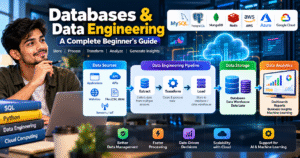
🗄️ Databases & Data Engineering: A Complete Beginner’s Guide
🚀 Introduction to Databases & Data Engineering
In today’s digital world, businesses generate enormous amounts of data every day. This data includes customer information, online transactions, product details, website activity, and business reports. Managing this information efficiently is essential for organizations of all sizes.
A database is a system used to store, organize, retrieve, and manage data. Data Engineering is the process of collecting, cleaning, transforming, and processing data so that it can be used for analytics, reporting, machine learning, and business decision-making.
From e-commerce platforms and banking systems to healthcare applications and social media websites, databases and data engineering play an important role in modern technology.
🗄️ What Is a Database?
A database is an organized collection of data that can be easily accessed, updated, searched, and managed.
For example, a college database may contain student names, roll numbers, course details, examination marks, and attendance records.
A Database Management System (DBMS) is software that helps users and applications create, access, and manage databases efficiently.
📌 Types of Databases
1. 📊 Relational Databases (SQL)
Relational databases organize data into tables containing rows and columns. They also support relationships between tables, making structured data easier to manage.
Examples: MySQL, PostgreSQL, Microsoft SQL Server, and Oracle Database.
2. 📦 NoSQL Databases
NoSQL databases support different data models, including document, key-value, graph, and wide-column structures. They are useful when traditional relational tables are not the best fit for an application’s requirements.
Examples: MongoDB, Redis, and Apache Cassandra.
3. ☁️ Cloud Databases
Cloud databases run on cloud infrastructure and provide database capabilities through cloud services. Depending on the provider, they can simplify provisioning, maintenance, backups, and scaling.
Examples: Amazon RDS, Azure SQL Database, and Google Cloud SQL.
4. ⚡ In-Memory Databases
In-memory databases primarily keep data in RAM, which can enable very fast data access for suitable workloads.
Example: Redis.
⚙️ What Is Data Engineering?
Data Engineering is the practice of building and maintaining systems that collect, process, store, and deliver data from different sources.
Data engineers develop data pipelines that transform raw information into reliable, structured, and useful datasets for analytics teams, business applications, and machine learning systems.
For example, an online shopping company may receive thousands of orders every day. A data engineer can build a pipeline that collects order information, handles duplicate records, standardizes data formats, and prepares the results for sales reports.
🔄 Key Responsibilities of Data Engineering
1. 📥 Data Collection: Gathering information from websites, applications, APIs, databases, and sensors.
2. 🧹 Data Cleaning: Identifying and handling duplicate records, missing values, inconsistent formats, and invalid data.
3. 🔧 Data Transformation: Converting raw data into a useful format, such as standardizing dates or calculating total sales.
4. 🏗️ Data Storage: Storing information in databases, data warehouses, or data lakes according to business requirements.
5. 🔄 Data Pipeline Development: Building automated workflows that transfer and process data between systems.
6. 📊 Data Delivery: Making processed data available for dashboards, reports, analytics, and machine learning applications.
🔗 Database vs. Data Engineering: What Is the Difference?
Databases and data engineering are closely connected, but they serve different purposes.
🗄️ Database: Focuses on storing, organizing, retrieving, and updating data.
⚙️ Data Engineering: Focuses on collecting, processing, transforming, and delivering data across systems.
For example, a database stores orders placed on an e-commerce website, while a data engineering pipeline processes those orders to generate daily sales reports.
🛠️ Popular Tools and Technologies in Data Engineering
Data engineers use different programming languages, databases, and platforms to build reliable data systems.
🐍 Python: Used for data processing, automation, API integration, and pipeline development.
🗃️ SQL: Used to retrieve, filter, join, and aggregate data stored in relational databases.
🐘 PostgreSQL and MySQL: Used to store and manage structured data.
⚡ Apache Spark: Used for distributed processing of large datasets.
📨 Apache Kafka: Used for real-time data streaming and event processing.
🔄 Apache Airflow: Used to schedule, orchestrate, and monitor data workflows.
☁️ Cloud Platforms: AWS, Microsoft Azure, and Google Cloud provide services for building and managing data infrastructure.
📊 Power BI: Used to create interactive dashboards and reports from processed data.
🏢 Real-World Example: E-commerce Data Engineering
Imagine an e-commerce company that sells thousands of products every day. The company wants to identify its best-selling products, understand which cities generate the most orders, and calculate monthly revenue.
A data engineering pipeline can help achieve these goals through the following steps.
Step 1 — 📥 Data Collection: Collect order information from the website and payment systems.
Step 2 — 🧹 Data Cleaning: Identify duplicate records, invalid values, and inconsistent information.
Step 3 — ⚙️ Data Processing: Calculate total sales, order counts, and product-wise revenue.
Step 4 — 🏗️ Data Storage: Store the processed information in a data warehouse or analytical database.
Step 5 — 📊 Data Visualization: Use a tool such as Power BI to create dashboards showing sales trends and business performance.
This process provides useful insights that help businesses make informed, data-driven decisions.
💼 Essential Skills for Becoming a Data Engineer
If you want to build a career in data engineering, focus on developing the following skills.
- 🗃️ SQL: Queries, joins, subqueries, common table expressions (CTEs), and window functions.
- 🐍 Python: Programming fundamentals, functions, file handling, and data processing.
- 🧱 Database Design: Tables, relationships, keys, and normalization.
- 🔄 ETL/ELT: Understanding data extraction, transformation, and loading.
- ☁️ Cloud Computing: Cloud storage, databases, and data services.
- ⚡ Big Data Tools: Fundamentals of Apache Spark and Kafka.
- 🔧 Git and Linux: Version control, command-line operations, and automation.
- 📊 Data Warehousing: Fact tables, dimension tables, and analytical data models.
Beginners should start with SQL, Python, and PostgreSQL. After developing a strong foundation, they can move on to ETL pipelines, cloud platforms, and big data technologies.
🌟 Benefits of Databases & Data Engineering
🔒 Better Data Management: Databases help keep information organized, consistent, and accessible.
⚡ Faster Processing: Automated pipelines reduce repetitive manual tasks and improve data workflows.
📈 Better Business Decisions: Accurate and timely data helps organizations understand performance and identify opportunities.
🤖 Support for AI and Machine Learning: Reliable, well-processed data is essential for training and operating machine learning models.
📊 Improved Reporting: Consistent datasets make it easier to build meaningful dashboards and business reports.
❓ Frequently Asked Questions (FAQs)
1. What Is the Difference Between a Database and a DBMS?
A database is an organized collection of data, while a Database Management System (DBMS) is software used to create, manage, and access that data.
2. Is Python Necessary for Data Engineering?
Python is highly useful for automation, data processing, and pipeline development. However, the exact programming languages required depend on the role and technology stack.
3. Is SQL Important for Data Engineering?
Yes. SQL is one of the most important data engineering skills because engineers frequently use it to retrieve, transform, validate, and analyze data.
4. What Is the Difference Between a Data Engineer and a Data Analyst?
A data engineer builds and maintains data infrastructure and pipelines. A data analyst examines available data to create reports, dashboards, and business insights. Both roles may share some technical skills.
5. How Can Beginners Start Learning Data Engineering?
Start with SQL and database fundamentals. Then learn Python, data cleaning, ETL pipelines, data warehousing, and cloud technologies. Build practical projects to strengthen your understanding.
📝 Conclusion
Databases and Data Engineering are essential parts of modern technology. Databases store and manage information, while data engineering transforms that information into reliable, useful datasets for analysis and applications.
By learning database fundamentals, SQL, Python, data pipelines, and cloud technologies, beginners can build a strong foundation for careers in data engineering, data analytics, cloud computing, and artificial intelligence.
Start with small practical projects, gradually explore advanced tools, and develop the skills needed to build reliable, scalable data systems.
🗄️ Databases & Data Engineering: जानिए क्या है और कैसे काम करता है?
🚀 Introduction to Databases & Data Engineering
आज के digital world में हर business के पास बड़ी मात्रा में data होता है। जैसे customer details, online transactions, product information, website activity और business reports। इस data को सही तरीके से store, manage और analyze करना किसी भी organization के लिए बहुत जरूरी है।
Database एक ऐसी system है, जिसमें data को व्यवस्थित तरीके से store और manage किया जाता है। वहीं, Data Engineering वह process है, जिसमें अलग-अलग sources से data collect करके उसे clean, transform और process किया जाता है, ताकि वह analysis और decision-making के लिए तैयार हो सके।
आज Amazon, banking platforms, healthcare systems, e-commerce websites और social media applications जैसी services databases और data engineering पर निर्भर करती हैं।
🗄️ Database क्या होता है?
Database एक organized collection of data होता है, जिसे आसानी से access, update, search और manage किया जा सकता है।
उदाहरण के लिए, किसी college के database में students के नाम, roll numbers, courses, marks और attendance की जानकारी store की जा सकती है।
Database को manage करने के लिए DBMS (Database Management System) का इस्तेमाल किया जाता है। यह users और applications को data के साथ काम करने की सुविधा देता है।
📌 Databases के मुख्य प्रकार
1. 📊 Relational Database (SQL)
Relational databases में data को tables, rows और columns के रूप में organize किया जाता है। इनमें tables के बीच relationships भी बनाई जा सकती हैं।
Examples: MySQL, PostgreSQL, Microsoft SQL Server और Oracle Database।
2. 📦 NoSQL Database
NoSQL databases का इस्तेमाल ऐसे data के लिए किया जाता है, जिसे traditional relational tables में रखना हमेशा सुविधाजनक नहीं होता। इनमें document, key-value, graph और wide-column जैसे data models शामिल हैं।
Examples: MongoDB, Redis और Apache Cassandra।
3. ☁️ Cloud Database
Cloud databases cloud infrastructure पर उपलब्ध होते हैं। इन्हें provider के अनुसार manage, scale और maintain किया जा सकता है।
Examples: Amazon RDS, Azure SQL Database और Google Cloud SQL।
4. ⚡ In-Memory Database
In-memory databases मुख्य रूप से data को RAM में रखते हैं, जिससे कई प्रकार के operations बहुत तेजी से किए जा सकते हैं।
Example: Redis।
⚙️ Data Engineering क्या है?
Data Engineering, data को उसके original source से लेकर usable format तक पहुंचाने की प्रक्रिया है। इसमें data collection, storage, cleaning, transformation और processing शामिल होते हैं।
Data Engineers ऐसे systems और pipelines बनाते हैं, जो अलग-अलग sources से data लेकर उसे analytics, reporting, machine learning और business applications के लिए तैयार करते हैं।
उदाहरण के लिए, एक online shopping company के पास हर दिन हजारों orders का data आता है। Data Engineer उस data को collect करके invalid records हटाने, formats सही करने और reports के लिए तैयार करने वाली pipeline बना सकता है।
🔄 Data Engineering के मुख्य काम
1. 📥 Data Collection: Websites, applications, APIs, databases और sensors से data collect करना।
2. 🧹 Data Cleaning: Duplicate records, missing values और गलत formats को पहचानकर handle करना।
3. 🔧 Data Transformation: Raw data को useful format में बदलना, जैसे dates standardize करना या sales calculate करना।
4. 🏗️ Data Storage: जरूरत के अनुसार data को databases, data warehouses या data lakes में store करना।
5. 🔄 Data Pipeline Development: Data को एक system से दूसरे system तक automatically transfer और process करने की व्यवस्था बनाना।
6. 📊 Data Delivery: Process किए गए data को dashboards, reports, analytics teams और machine learning applications के लिए उपलब्ध कराना।
🔗 Database और Data Engineering में क्या अंतर है?
Database और Data Engineering एक-दूसरे से जुड़े हुए हैं, लेकिन दोनों का उद्देश्य अलग है।
🗄️ Database: Data को store, organize, retrieve और update करने पर focus करता है।
⚙️ Data Engineering: Data को collect, process, transform और अलग-अलग systems तक पहुंचाने पर focus करता है।
उदाहरण के लिए, database किसी e-commerce website के orders store करता है, जबकि data engineering pipeline उन orders को process करके daily sales report तैयार करने में मदद करती है।
🛠️ Data Engineering में इस्तेमाल होने वाली Technologies
Data Engineering में अलग-अलग tools और technologies का इस्तेमाल किया जाता है।
🐍 Python: Data processing, automation, APIs और data pipelines बनाने के लिए।
🗃️ SQL: Database से data retrieve करने, filter करने, join करने और aggregate करने के लिए।
🐘 PostgreSQL और MySQL: Structured data store और manage करने के लिए।
⚡ Apache Spark: बड़े datasets को distributed तरीके से process करने के लिए।
📨 Apache Kafka: Real-time data streaming और event processing के लिए।
🔄 Apache Airflow: Data workflows को schedule, orchestrate और monitor करने के लिए।
☁️ Cloud Platforms: AWS, Microsoft Azure और Google Cloud पर data infrastructure बनाने और manage करने के लिए।
📊 Power BI: Process किए गए data से interactive dashboards और reports बनाने के लिए।
🏢 Real-World Example: E-commerce Data Engineering
मान लीजिए एक e-commerce company हर दिन हजारों products बेचती है। Company जानना चाहती है कि कौन-से products सबसे ज्यादा बिक रहे हैं, किस शहर से ज्यादा orders आ रहे हैं और हर महीने की revenue कितनी है।
इसके लिए एक data pipeline इस प्रकार काम कर सकती है:
Step 1 — 📥 Data Collection: Website और payment system से order data collect किया जाता है।
Step 2 — 🧹 Data Cleaning: Duplicate orders, invalid values और inconsistent records को handle किया जाता है।
Step 3 — ⚙️ Data Processing: Total sales, order count और product-wise revenue calculate की जाती है।
Step 4 — 🏗️ Data Storage: Processed data को data warehouse या analytical database में store किया जाता है।
Step 5 — 📊 Data Visualization: Power BI जैसे tool से dashboard बनाया जाता है, जिसमें sales trends और business performance दिखाई जाती है।
इस process की मदद से business को बेहतर insights मिलते हैं और वह data-driven decisions ले सकता है।
💼 Data Engineer बनने के लिए कौन-सी Skills जरूरी हैं?
अगर आप Data Engineering में career बनाना चाहते हैं, तो इन skills पर ध्यान दें:
- 🗃️ SQL: Queries, joins, subqueries, CTEs और window functions।
- 🐍 Python: Programming basics, functions, file handling और data processing।
- 🧱 Database Design: Tables, relationships, keys और normalization।
- 🔄 ETL/ELT: Data extraction, transformation और loading की समझ।
- ☁️ Cloud Computing: Cloud storage, databases और data services।
- ⚡ Big Data Tools: Apache Spark और Kafka की basic understanding।
- 🔧 Git और Linux: Version control, command line और automation।
- 📊 Data Warehousing: Fact tables, dimension tables और analytical data models।
शुरुआत में SQL, Python और PostgreSQL पर मजबूत पकड़ बनाना उपयोगी रहेगा। इसके बाद ETL pipelines, cloud platforms और big data technologies सीख सकते हैं।
🌟 Databases & Data Engineering के फायदे
🔒 Better Data Management: Data को organized और accessible रखने में मदद मिलती है।
⚡ Faster Processing: Automated pipelines की मदद से बार-बार होने वाले manual tasks कम किए जा सकते हैं।
📈 Better Business Decisions: Accurate और timely data से business performance समझना आसान होता है।
🤖 AI और Machine Learning Support: अच्छी quality का processed data machine learning models और AI applications के लिए उपयोगी होता है।
📊 Improved Reporting: Dashboards और reports के लिए consistent data उपलब्ध कराया जा सकता है।
❓ Frequently Asked Questions (FAQs)
1. Database और DBMS में क्या अंतर है?
Database organized data का collection है, जबकि DBMS वह software है जो database को create, manage और access करने में मदद करता है।
2. क्या Data Engineering सीखने के लिए Python जरूरी है?
Python बहुत उपयोगी है, लेकिन हर task के लिए अनिवार्य नहीं। SQL भी Data Engineering की सबसे महत्वपूर्ण skills में से एक है।
3. क्या Data Engineering के लिए SQL आना जरूरी है?
हां, SQL सीखना अत्यंत उपयोगी है क्योंकि data engineers अक्सर databases से data निकालते हैं, उसे transform करते हैं और analytical systems के लिए तैयार करते हैं।
4. Data Engineer और Data Analyst में क्या अंतर है?
Data Engineer data pipelines और data infrastructure बनाता है। Data Analyst उपलब्ध data का analysis करके reports, dashboards और business insights तैयार करता है। दोनों roles में कुछ skills common हो सकती हैं।
5. Data Engineering सीखने की शुरुआत कैसे करें?
SQL और database fundamentals से शुरुआत करें। इसके बाद Python, data cleaning, ETL pipelines, data warehousing और cloud technologies सीखें। छोटे practical projects बनाकर concepts को मजबूत करें।
📝 Conclusion
Databases और Data Engineering modern technology का महत्वपूर्ण हिस्सा हैं। Databases data को व्यवस्थित तरीके से store और manage करते हैं, जबकि Data Engineering उस data को useful, reliable और analysis-ready बनाने में मदद करती है।
अगर आप Software Development, Data Analytics, Cloud Computing या Artificial Intelligence में career बनाना चाहते हैं, तो database fundamentals और data engineering concepts सीखना आपके लिए एक मजबूत foundation तैयार कर सकता है।
आज से SQL, Python और PostgreSQL जैसे tools के साथ शुरुआत करें और धीरे-धीरे अपने practical projects बनाएं।